Ceuta deserved unity; the PSOE chose its own party
The crisis in Ceuta called for unconditional support from all parties. In Madrid and Guardamar, the PSOE put its own party before the people of Ceuta, and the ballot box now offers a chance to change that.
What has happened in Ceuta
Since late July, Ceuta has been facing a serious migration and border crisis following a mass arrival of people from Morocco. Residents of Ceuta, and those of us with family or friends there, describe a city overwhelmed: women afraid to go out into the street, businesses and hospitality venues seeing their season collapse, and public services (security, healthcare and education) stretched to breaking point.
Ceuta’s voice
The city’s president, Juan Jesús Vivas, summed it up this week on COPE. In his view, Ceuta is experiencing “the most serious national security crisis of the entire democratic period”. He also regretted that the Prime Minister, who “should represent us all”, had, in his opinion, failed to fulfil his constitutional duty to protect the territorial integrity and rights of the 83,000 Spaniards who live there.
I share his assessment. And it pains me that Pedro Sánchez’s response, as the interviewer himself recalled, was to brush the matter aside with “ask Vivas”.
A government that was absent
When part of Spain is suffering, the national government must be on the front line. Not to pose for a photo, but to take responsibility. In my view, what the people of Ceuta have seen is the opposite: silence, evasions and a temptation to turn a matter of state into a party-political stand-off.
Guardamar also fell short
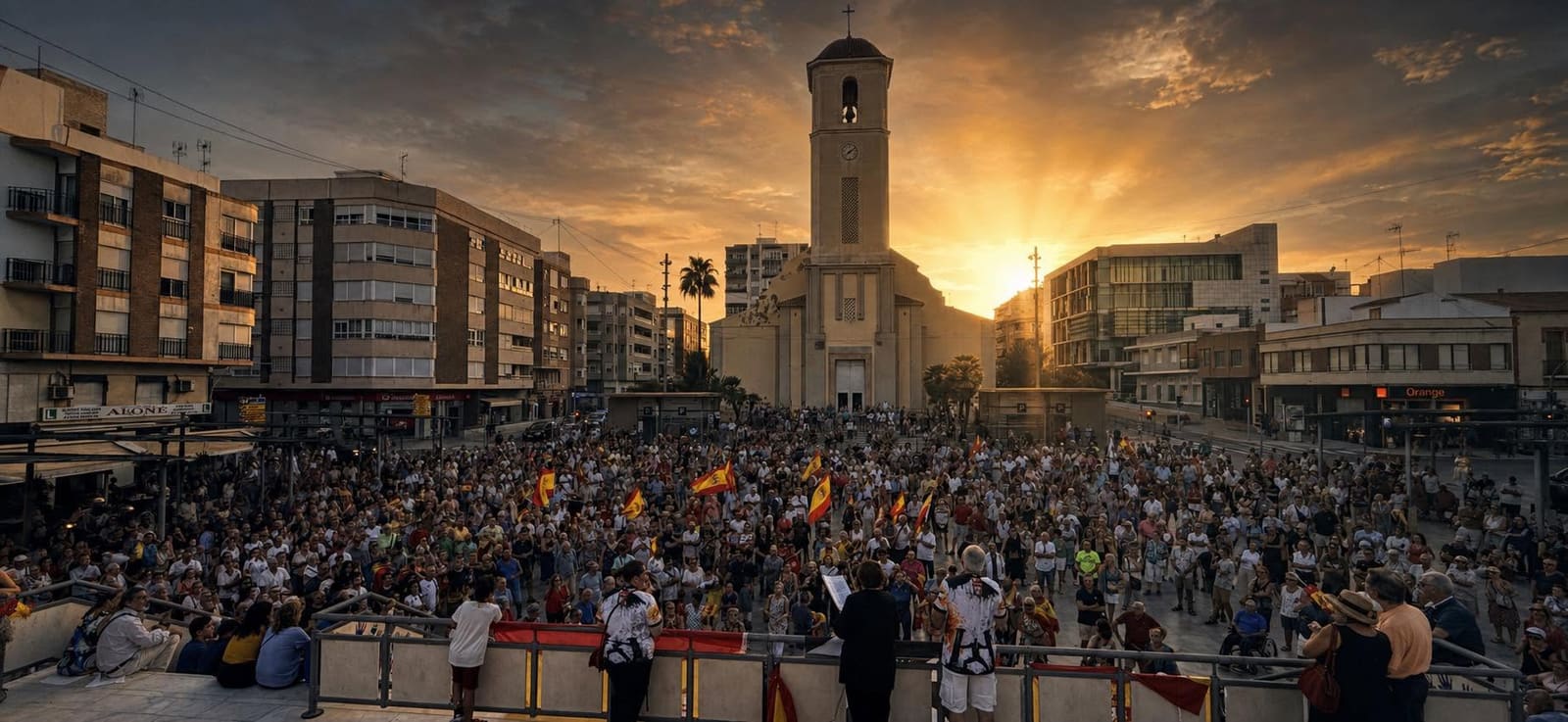
Here in our town, much-loved residents with family in Ceuta have moved us deeply with their accounts. The support gathering filled the square, and I have rarely experienced such an emotional moment. Yet the parties were unable to offer unanimous, unconditional support. The left, represented by the PSOE—or what remains of it—and EU, did not attend the event. I believe the socialist governing team once again put party discipline ahead of the feelings of its residents, while the other left-wing group looked the other way, as it always does when asked to show support...
What we learned from ETA is unforgettable to many; to others, it means nothing.
I did not live through the war or the dictatorship. I lived in a democracy in which, when ETA carried out assassinations, all the parties stood together. The public interest and Spain’s integrity came before any flag. That Spain knew how to reach agreement when it mattered most. It did not matter where people were murdered, kidnapped or extorted, because, ladies and gentlemen, that is what the left in this country did while I was a child and not so much of a child. Today, in the name of a false justice against “the right” and in pursuit of more than false progress, we have regressed as a society. And Guardamar has too, if we look around us.
There is a solution This is a harsh criticism, and it should be. But it does not come from resentment; it comes from the conviction that this can be put right. Spain has realised it, the province has realised it, and Guardamar has too.
The general election on 29 November is an opportunity to have a government that protects all Spaniards equally, whether they live in Ceuta or the Vega Baja. And the local elections will be an opportunity to restore a Town Hall with ideas. I believe in, and want, a Guardamar where every family can stand on its own feet and young people can go as far as they aspire to, without depending on an exhausted administration that cannot reach agreement even when we all need it to.
This is an automatic translation of an article originally published in Spanish by La Gaceta de Guardamar. If in doubt, the Spanish version prevails. Read the original · More news in English