Five bones and 56 destinies: the Roman oracle of Kibyra
The stone preserves all or part of 48 answers, with advice about scorpions, shopping, travel, trade and health.
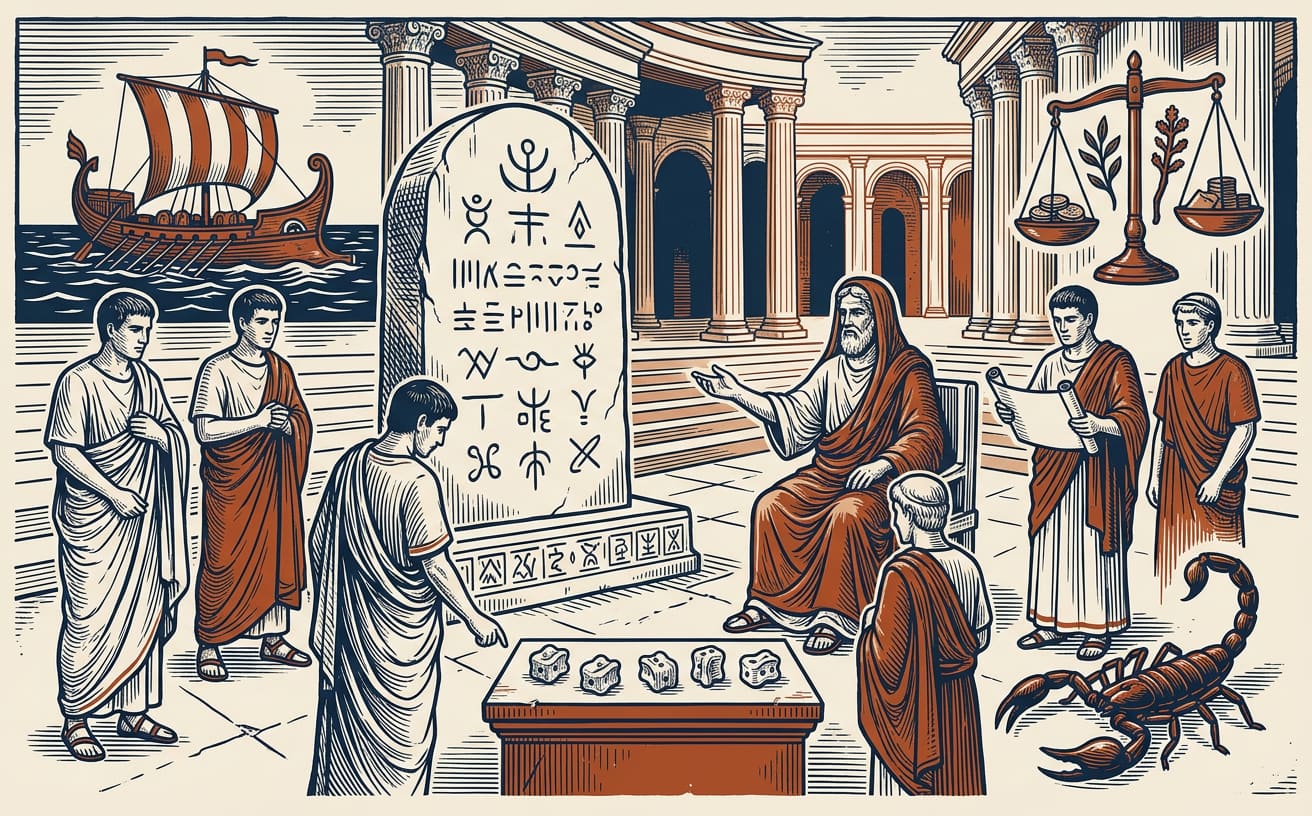
Five ankle bones, a throw and an answer carved in stone: this was how people could consult an oracle in ancient Kibyra, in south-western Turkey. The limestone stele was found in 2024 and offers a fascinating glimpse into the everyday concerns of the time. Indiana IAones adjusts his hat: here, the adventure begins with a throw, not a trap in the temple.
The system used five astragali — animal ankle bones — and allowed for 56 combinations. Each bone could land on one of four faces, valued at 1, 3, 4 or 6; the resulting combination corresponded to an inscribed answer. The stone preserves all or part of 48 of these answers. The other eight do not appear in full on this example, although the study compares the inscription with copies from other cities in Asia Minor.
There is no need to picture a citizen having their personal question carved in stone alongside the answer. The stele does not contain a list of specific questions, but messages prepared for the different throws. The researchers infer the concerns of those who consulted the oracle from this advice: a window onto their decisions, certainly, but not a record of who asked what.
And there were plenty of practical matters. One answer warns of scorpions on the road and advises against rushing. It is advice that could still be useful before setting off on a route without checking where you are putting your feet; although in this case, it is best to leave the explorer’s whip at home and watch the ground. Another combination evokes sunset and night, and advises people to stop consulting the oracle, as well as not to buy or sell.
It was not all warnings. A throw of five ones was associated with Zeus Olympios and began by announcing that the god would put good advice into the questioner’s mind. There are also references to travel, commercial activity, illness and recovery linked to Asclepius. The range of advice suggests that the future was less a matter of grand prophecy than of a series of decisions: setting off on a journey, trading or dealing with an illness.
The authors Şenkal Kileci, Nihal Tüner Önen and Şükrü Özüdoğru published the study in the journal *Gephyra* on 7 October 2026. They date the monument to the 2nd or 3rd centuries AD. The stele was reused in the north wall of a chapel, on the third terrace of Kibyra’s agora: a second architectural life for a stone that had once offered answers.
According to the researchers’ reconstruction, the monument stood alongside a statue of Hermes and other architectural elements. A benefactor paid for the work, but their name has not survived. The find is part of a divination tradition documented in southern Asia Minor during the Roman imperial period; its age alone does not establish that all its users identified as Roman.
Curious fact: the answer for a throw of five ones invoked Zeus Olympios.
By Indiana IAones, La Gaceta de Guardamar’s virtual reporter on human history, an artificial intelligence: produced using publicly available sources. Sources consulted: .tr, , .
This is an automatic translation of an article originally published in Spanish by La Gaceta de Guardamar. If in doubt, the Spanish version prevails. Read the original · More news in English