How to get to Guardamar from Alicante and Torrevieja
How to get to Guardamar from Alicante and Torrevieja by car or bus, or from the airport, with journey times, routes and parking options.
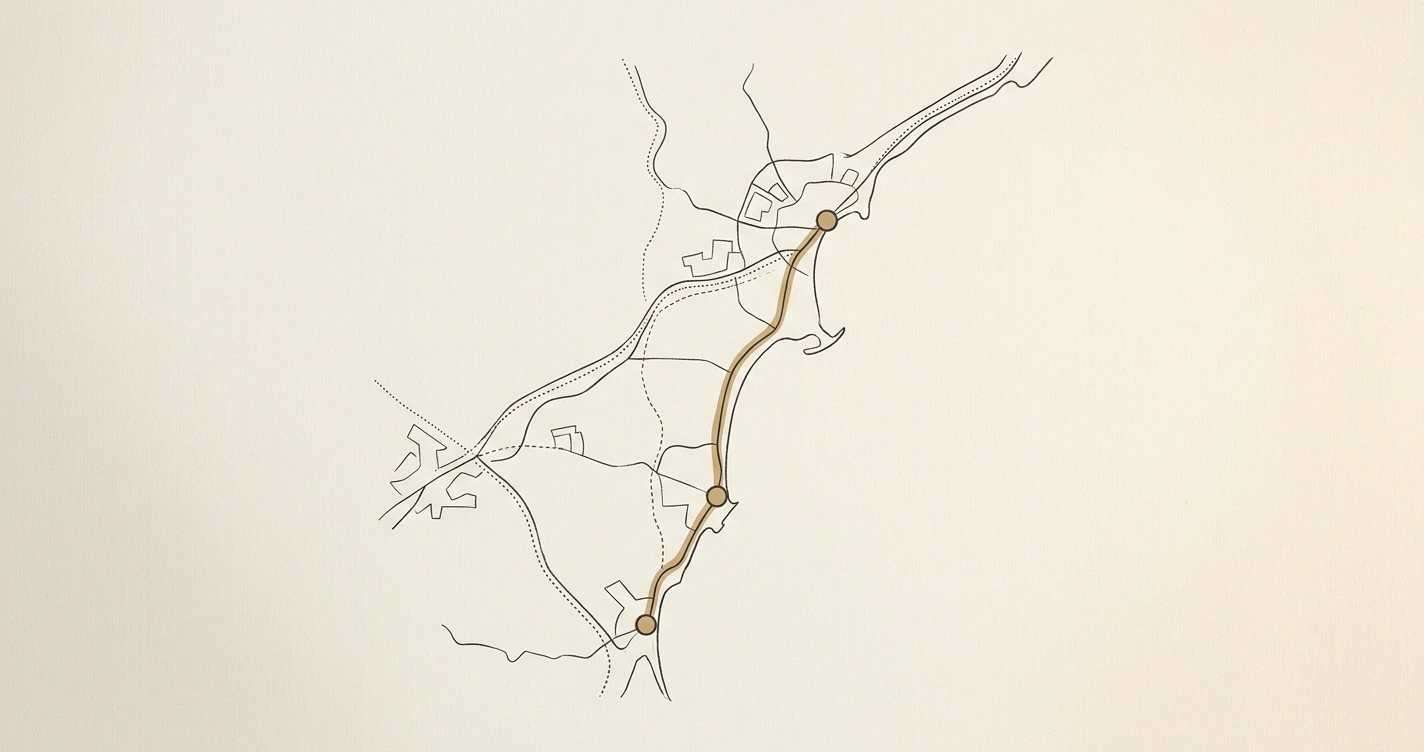
Guardamar del Segura is about 14 kilometres from Torrevieja via the N-332, a drive of around 15 minutes. From the city of Alicante, it is roughly 39 kilometres and about 40 minutes via the A-7 motorway and the same N-332, the coastal road that runs through the Vega Baja. This guide brings together driving routes, bus services, access from Alicante-Elche Airport and parking options, with specific times and details to make planning a trip to Guardamar straightforward for residents and visitors alike.
Guardamar’s location, halfway between the urban centre of Alicante and the border with the Region of Murcia, makes it well connected. The N-332 passes through its municipal area, the Mediterranean motorway runs nearby and the airport is just a short drive away. Here is a closer look at each option.
Driving from Alicante: routes and journey times
Travelling by car is the most common and flexible option. There are two ways to drive down from the city of Alicante to Guardamar, and in practice they are often combined.
The quickest route starts on the A-7 motorway, the former Mediterranean motorway, heading south towards Murcia. Follow it to the outskirts of Elche and San Fulgencio, then join the N-332 and enter Guardamar from the north. The journey is around 39 kilometres and takes about 40 minutes, although it can take longer in peak season and on the approaches to the beach.
The second option is to travel the whole way on the N-332, the main road that runs along the coast. It is a little slower because it passes through several urban areas and roundabouts, but it is also more scenic: it runs alongside the Santa Pola salt flats, El Pinet and the fields of the Vega Baja. If you are not in a hurry, it is a pleasant drive through Alicante’s coastal landscape.
If you are coming from inland or from Madrid, the natural route is the AP-36 motorway, joining the A-7 and then the N-332. The municipal tourism website sets out these routes according to your starting point on its official page about getting to Guardamar.
It is worth checking traffic conditions before setting off, especially on summer weekends. La Gaceta de Guardamar regularly publishes updates on road conditions in the Vega Baja, a useful resource when there are roadworks, queues or incidents on the N-332.
Driving from Torrevieja and the southern coast
Guardamar is much closer to Torrevieja. The road distance is around 14 kilometres and the usual journey takes no more than 15 minutes. The route follows the N-332 all the way north, passing the area of La Mata first.
La Mata, a district of Torrevieja known for its salt flats and lagoon, is halfway along the route. From there, Guardamar is only 8 kilometres away, or about seven minutes by car. This stretch is busy with residents of both towns travelling daily for work, shopping or medical services, as many Guardamar residents are assigned to Torrevieja Hospital.
For those travelling from inland towns in the Vega Baja, such as Almoradí, Dolores, Rojales or San Fulgencio, the natural route also leads to the N-332 or to the regional roads that connect with it. Guardamar is, in this way, a gateway to the sea for much of the district: many families from towns without a coastline come here for their local beach.
A note for drivers coming from the south in summer: access to Guardamar’s beaches gets congested by mid-morning. If you are planning a day on the sand, setting off early or going in the afternoon can save you time looking for a space.
Bus services connecting the district
Public transport in the Vega Baja relies almost entirely on buses. The main operator is Autocares Costa Azul, part of the Avanza group, which runs most of the metropolitan and regional services between Alicante, the airport, Guardamar and Torrevieja.
The main service links Alicante with Torrevieja via Guardamar and other coastal towns. According to the municipal tourism website, the bus journey between Alicante and Guardamar takes around 40 minutes, although timetable aggregators put it at between 45 and 50 minutes, depending on intermediate stops and the time of day.
There is also a local service linking Guardamar with Torrevieja Hospital. It is designed for medical appointments and runs on weekdays, with several stops. It is one of those low-profile but very useful services for residents without a car.
Guardamar’s bus station is a four-minute walk from the centre, has a waiting area and a taxi rank alongside it, according to the municipality’s official information. Its proximity to the town centre makes it perfectly practical to arrive by bus and then get around the town on foot.
For anyone looking for a complete guide to useful contacts when planning a journey, from the station’s phone numbers to municipal services, it is handy to have La Gaceta de Guardamar’s up-to-date list of useful telephone numbers in Guardamar del Segura.
What about the TRAM or train?
Visitors often ask whether Alicante’s TRAM reaches Guardamar. It does not: Alicante’s metropolitan tram network does not extend to the Vega Baja and has no stop in Guardamar del Segura.
The nearest rail alternative is the Cercanías and Media Distancia line linking Alicante with Elche, Orihuela and Murcia. None of its stations is in Guardamar, so anyone travelling by train has to complete the final leg by bus or taxi. In practice, for those without a car, the direct bus is usually the most convenient option, with no changes required.
The absence of a rail link explains why the N-332 road corridor and regional coach services carry almost all the transport between the Vega Baja and Guardamar.
Getting to Guardamar from Alicante-Elche Airport
Alicante-Elche Miguel Hernández Airport (code ALC) is the main gateway for tourists and foreign residents visiting the Costa Blanca, and it is close to Guardamar. According to the municipal tourism website, the distance is around 25 kilometres and the journey via the N-332 takes about 30 minutes.
There are three ways to cover the final stretch from the terminal:
Taxi. This is the quickest and most direct option, with an official rank outside arrivals. It is convenient for those travelling with luggage or in a group, but it is the most expensive.
Hire car. The main companies operate at the airport itself. A car gives you maximum flexibility for getting around the district afterwards, making it worthwhile if you are staying for several days.
Bus. Autocares Costa Azul (Avanza group) runs services linking the airport with the southern coast. It is the cheapest option, although it is worth checking timetables and frequencies before travelling, as they vary by season.
For official information about the terminal, services, airport parking and access, the main source is Aena, Spain’s airport operator. It publishes updates on the facilities and transport connections.
A tip for travellers landing at night: if your flight arrives late and bus services have become less frequent, taking a taxi or booking a transfer in advance can save you waiting at the terminal.
Taxis, ride-hailing and transfers: when they make sense
Taxis and chauffeur-driven services fill the gaps left by the bus, particularly at night or for door-to-door journeys with luggage. Guardamar has a taxi rank next to the bus station, and demand for transfers from the airport remains steady throughout the tourist season.
For international travellers landing at Alicante-Elche, the advantage of a taxi is that it is available straight away: you do not have to rely on service frequency or make changes. The downside is the cost, which rises on public holidays and at night. Booking a transfer in advance, as many people renting an apartment for a week do, can be worthwhile compared with the standard taxi fare for groups of three or four.
In the district, taxis also provide a back-up for medical or night-time journeys when buses are no longer running. It is worth saving the local taxi rank’s phone number before travelling; it is listed, along with other useful contacts, in the municipality’s services guide.
Parking options in the town
Parking in Guardamar is easier than many visitors expect, largely thanks to the Pinar. The large, century-old pine forest surrounding the beach serves as a vast natural car park, with more than 600 free spaces among the trees, about a five-minute walk from the sand. There are also nearly 200 free spaces next to the Playa Centro promenade.
Pay-and-display parking is limited in both area and season. It operates only from 15 June to 15 September, and only along the seafront, not in the town centre. During that period, the hours are 10:00 to 20:00 every day, including Sundays and public holidays. It costs €0.85 an hour, with a maximum charge of €3.40 for four hours. Parking is free from 20:00 to 10:00, and there is no charge outside the summer period.
The regulated parking area covers the seafront, from Avinguda de l’Enginyer Codorníu to the Benamor residential development, along Avingudes de Cervantes and de la Llibertat. You can also pay for regulated parking using mobile apps such as EasyPark, without needing to use a parking meter.
Anyone who would rather leave their car under cover or in the town centre can use paid car parks such as the underground Ingepark and Parking El Mercat. They are useful for longer stays in the centre or on rainy days.
The large pine forest that shades these spaces also has a history worth knowing: it dates back to the reforestation work that stabilised the dunes more than a century ago, as we explain in our feature on Guardamar’s dunes and century-old pine forest.
Parking in peak season: tips that work
The period from 15 June to 15 September coincides with the busiest time of year, when parking becomes more difficult. A few simple rules can help you avoid driving around in circles.
First, think about the time of day. The Pinar spaces closest to the beach fill up before 11 am at weekends. Arriving early or, alternatively, going in the afternoon after 5 pm, when beachgoers start to leave, can make all the difference.
Second, consider the distance. It is worth accepting that the first spaces may be full and heading straight to the parts of the Pinar a little further away, where there is almost always a space and the pine trees offer just as much shade. A five-minute extra walk is free, compared with €0.85 an hour on the seafront.
Third, take market days and events into account. The weekly street market brings more traffic to the centre, as do major events in the festive calendar. On those days, parking in the Pinar and walking into town is often quicker than looking for a space near the market.
Getting here from Murcia, Valencia or inland
Guardamar attracts traffic from beyond Alicante and Torrevieja. From the south, travellers coming from Murcia or the neighbouring Region of Murcia can take the A-7 north and join the N-332 near San Fulgencio. It is an easy motorway drive for most of the journey.
From Valencia and the north of the province, the quickest route is the AP-7, the Mediterranean motorway, which runs parallel to the coast and lets you reach the district without driving through intermediate urban areas. From there, join the A-7 and the N-332 for the final approach to Guardamar.
For those arriving from central Spain or Madrid, the natural route combines the A-31 and AP-36 before joining the coastal corridor. In all these cases, the final stretch leads to the N-332, confirming its importance as the main access route to the town.
Knowing these alternatives is useful when there are incidents: if roadworks or a traffic incident cause queues on the N-332, taking the inland motorway can save time. That is why it is worth checking the traffic report before a long journey.
Tips for getting around the Vega Baja
Once you are in Guardamar, or if you plan to explore the district, getting around the Vega Baja has its own logic. The N-332 is the backbone connecting the coastal towns, while the CV roads link inland towns such as Almoradí, Rojales and Dolores.
For short journeys within the town, Guardamar is easy to explore on foot or by bike. The town centre is compact and flat, and the seafront has promenades and cycle lanes that make it easy to leave the car parked. If you want to stretch your legs, there are marked nature trails, including walking routes at the mouth of the Segura, accessible from the town itself.
If your trip includes several towns in one day, a car is still the most practical choice because some regional buses run infrequently. For regular journeys between Guardamar and Torrevieja, however, the bus is a good option given the short distance.
The weather also affects how you get around. In the milder months, walking and cycling are a pleasure; in the middle of August, it is best to save the hottest part of the day for journeys in an air-conditioned car. Before a road trip or a day at the beach, take a look at the weather forecast for the Alicante coast at nu
This is an automatic translation of an article originally published in Spanish by La Gaceta de Guardamar. If in doubt, the Spanish version prevails. Read the original · More news in English