All Souls’ Day: customs in Guardamar
What is commemorated on All Souls’ Day in Guardamar del Segura: Masses, cemetery visits, flowers and how it differs from All Saints’ Day.
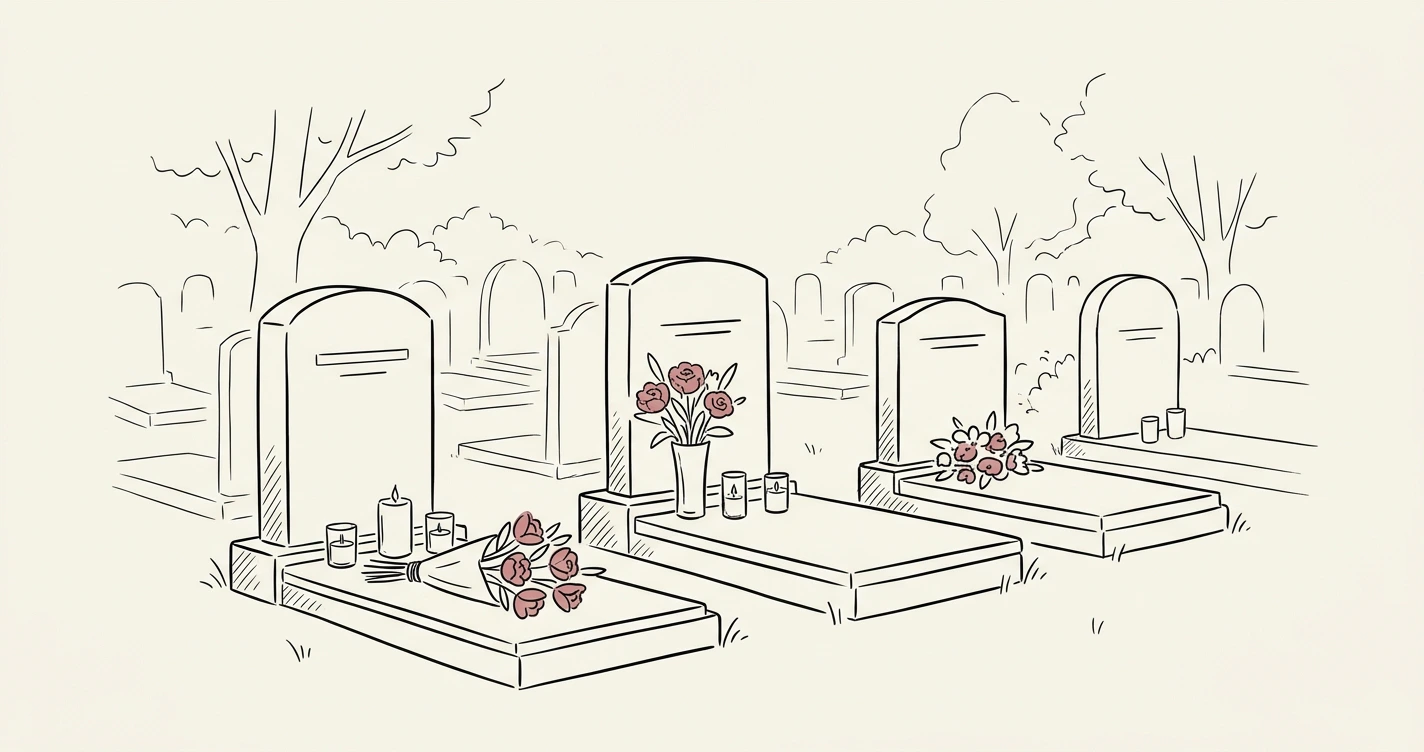
All Souls’ Day is commemorated on 2 November, the day the Church dedicates to praying for the dead. In Guardamar del Segura, it is marked by visits to the cemetery, Masses in the parishes and the tending of family graves.
The day follows All Saints’ Day and brings to a close two dates linked in the calendar but with different meanings. This guide explains how 2 November is commemorated in the town, which religious services are held, how it differs from All Saints’ Day and the role family memories play in these November customs.
What is commemorated on 2 November
On 2 November, the Church celebrates the Commemoration of All the Faithful Departed, a day of prayer for the dead. The Spanish Episcopal Conference sums it up clearly: 1 November is the day for celebrating the saints, and 2 November is for praying for all the faithful departed (Spanish Episcopal Conference, 2022).
The day has a solemn character, marked by reflection and prayer. In Guardamar del Segura and the rest of the Vega Baja, it is expressed through simple gestures: visiting the cemetery, placing flowers on a headstone and attending Mass in memory of those who are no longer with us.
All Souls’ Day is part of a calendar that begins on 31 October and runs until 2 November. Each date has its own character. The last, the day of the dead, is the most personal and best explains the meaning of the whole period.
How All Souls’ Day is commemorated in the town
In Guardamar del Segura, 2 November is marked above all at the municipal cemetery and in the parishes. Families visit the cemetery throughout the morning, clean graves, replace flowers and light candles in memory of their departed loved ones.
Most people visit in the early hours of the day. Many residents take advantage of the long weekend to travel to the town if they live elsewhere, so a visit to the cemetery also becomes a family reunion. Bunches of white and yellow chrysanthemums are the most familiar sight on the marble graves.
Visitor numbers on 2 November are usually somewhat lower than on the 1st, when the All Saints’ Day long weekend brings more people together. Even so, it is the day that gives the whole tradition its name and preserves its meaning as a day of prayer for the dead.
If you are planning a visit, it is worth checking access and road conditions in advance during these busier days. Information on road conditions in the Vega Baja today can help you plan your journey to the cemetery and avoid the busiest times.
Masses and religious services in local parishes
The parishes of Guardamar del Segura schedule special Masses in memory of the dead around these dates. The celebration of the Eucharist is the central religious service on 2 November and best explains the meaning of the day.
The tradition of praying for the dead is as old as the Church itself, as Ramón Navarro Gómez, director of the secretariat of the Episcopal Commission for the Liturgy, recalls in the Spanish Episcopal Conference’s statement. Mass is offered as a prayer for the souls of the departed, whom the Catholic faith holds can be helped by the prayers of the living community.
All Souls’ Day has a particular liturgical feature in Spain. Priests may celebrate three Masses on this day, a privilege traditionally granted to Spain, Portugal and Latin America and not universally permitted elsewhere in the Church.
Prayer for the dead rests on a central idea in the Catholic faith: the communion of the living and the dead. According to this doctrine, remembrance becomes a concrete help to souls through prayer, beyond the feelings it evokes. This belief fills the town’s churches at this time of year.
Mass times and service notices
Each parish sets its own Mass times, which can vary from year to year. Morning services are usually increased, and a specific Mass for the community’s departed may be announced. Check parish noticeboards or the church’s own channels for confirmation.
Parishes also often arrange times for prayer and prayers for the dead at the cemetery, bringing the religious service closer to the place where the departed rest. It is a long-established custom in the villages of the area.
Those unable to attend Mass on the day can request a Mass intention for someone who has died on another date. This is a common practice that allows a family member to be remembered on the anniversary of their death, outside the 2 November calendar date. Simply visit the parish sacristy and leave the name and preferred date.
Respect and remembrance in Vega Baja tradition
The Vega Baja’s All Souls’ Day tradition is rooted in respect and remembrance. Tending graves, placing flowers and keeping a quiet atmosphere in the cemetery are gestures repeated every November, conveying the same message: do not forget those who have died.
In villages across the area, from Guardamar del Segura to Almoradí, Dolores and Rojales, visiting the cemetery is almost a ritual at this time of year. Families prepare the graves in the days beforehand, remove wilted flowers and get everything ready for 1 and 2 November.
Candles play a special part in this tradition. Lit beside a headstone, they represent the light the community keeps for the souls of the departed. Their glow among the niches is one of the cemetery’s most recognisable sights on these days.
Respect extends to the character of the day as a whole. The solemn tone of 2 November sits alongside the more festive part of the autumn calendar, such as Halloween, which is celebrated a few days earlier. They are two sides of the same time of year, one more light-hearted and the other more reflective, and local residents readily distinguish between them.
People’s behaviour in the cemetery reflects this respect. Conversations become quieter, children learn to move carefully among the graves and visits take place without hurry. It is a space where the community agrees, without the need for written rules, on how to behave in keeping with the meaning of the day.
The difference between All Saints’ Day and All Souls’ Day
The difference between All Saints’ Day and All Souls’ Day is doctrinal as well as a matter of dates. On 1 November, the Church celebrates the saints who already enjoy heavenly glory. On 2 November, it prays for the faithful departed who, according to Catholic doctrine, may still need purification.
The Spanish Episcopal Conference explicitly makes this distinction: 1 November celebrates the saints, while 2 November is for praying for all the faithful departed (Spanish Episcopal Conference, 2022). The first is a day of joy; the second, of prayer and remembrance.
The theological basis for the day of the dead lies in the doctrine of purgatory. Catholic tradition holds that souls who have not been fully purified at the time of death can be helped by prayer, almsgiving and, in particular, the Eucharist offered by the living.
The distinction is also reflected in the character of each day. 1 November has the bright feel of a celebration, with the saints as examples and intercessors. On 2 November, the mood becomes quieter and focuses on remembrance and prayer. The liturgy changes from one day to the next, although residents may see them as part of a single occasion.
Two dates brought together in the calendar
In practice, most people experience 1 and 2 November as a single celebration. The All Saints’ Day long weekend brings the greatest numbers to the cemeteries, and the two dates overlap in popular custom. That is why many residents visit the cemetery on the 1st, even though prayer for the dead strictly belongs to the 2nd.
Confusion between the two days is common and understandable. The school and working calendar makes 1 November a public holiday, so the day off leads many residents to visit the cemetery then. The 2nd becomes a quieter continuation, with fewer visitors but the same spirit of remembrance.
The historical origins of the commemoration
The commemoration of the faithful departed has a specific monastic origin. Saint Odilo of Cluny, an abbot who died in 1048, ordered that all the dead be remembered each year in the monasteries of his congregation, a practice that later spread throughout the Church (Catholic Encyclopedia).
From Cluny, the custom spread to Benedictine congregations and, over time, to dioceses throughout Christendom. What began as a monastic prayer became a fixed date in the liturgical calendar, 2 November, and has continued to the present day.
This history, spanning almost a thousand years, explains why the tradition is so deeply rooted. When a family in Guardamar del Segura visits the cemetery on 2 November, it repeats a gesture the Church has maintained since the Middle Ages. That continuity is part of the day’s meaning.
The role of family memories at this time of year
Family memories are at the heart of All Souls’ Day customs. Beyond the religious rite, the day serves as a collective reminder of ancestors and an opportunity to pass their memory on to younger generations.
Tending a grave teaches young people who their grandparents and great-grandparents were. Children and grandchildren keep up the habit of visiting the cemetery precisely because they learnt it from their elders. In this way, the custom is passed on without needing to be explained.
Remembrance is also expressed through small everyday gestures. Commissioning a death notice, publishing an obituary or arranging a Mass are ways of recording that memory publicly. For those seeking guidance, La Gaceta de Guardamar explains what death notices and obituaries in Guardamar are like and how to publish them.
Food and sweets as a connection
Family memories are also kept alive around the table. At this time of year, seasonal sweets bring families together around recipes passed down through generations. Huesos de santo, fritters and other autumn desserts are part of the shared ritual after a visit to the cemetery.
Food traditions have their own history in the area. All Saints’ Day sweets, such as huesos de santo and wind fritters, show how religious tradition and local cooking come together in November. Many families in Guardamar still have their grandmother’s recipe and make it at home especially for these dates.
Flowers, candles and tending graves
Flowers and candles are the two physical elements that define the cemetery’s appearance on All Souls’ Day. The chrysanthemum is the flower most associated with this time of year, while the lit candle is a symbol accompanying prayer for the souls.
The chrysanthemum became popular for practical reasons. It flowers in late autumn, withstands the cold and keeps its colour for several days, making it ideal for decorating graves at this time of year. Its widespread presence turns cemeteries white and yellow every 1 and 2 November.
Tending graves begins before the date itself. In the days beforehand, families clean the marble, remove weeds and carry out any necessary repairs. It is quiet work that forms part of showing respect for the dead and makes a visit on the 2nd a more peaceful occasion.
Guardamar del Segura, a town of traditions
Guardamar del Segura keeps its customs alive throughout the year, and those of November are another example of its deep-rooted traditions. The town, with its beaches, dunes and centuries-old pine forest, has a strong sense of community that is reflected in dates such as All Souls’ Day.
The same local identity that explains residents’ devotion to religious traditions is also behind other symbols of the town. The connection residents feel with their natural heritage, such as the dunes and the centuries-old pine forest, is part of that same sense of belonging.
The days commemorating the dead strengthen that feeling. They are occasions when the town recognises its roots, remembers those who built today’s Guardamar and looks to the generations who will keep those memories alive.
November customs beyond the cemetery
All Souls’ Day opens a month with its own customs that go beyond visiting the cemetery. In Vega Baja tradition, November is a time for reflection, seasonal cooking and family reunions that begin with the All Saints’ Day long weekend.
November customs have an agricultural background. In the countryside of the Bajo Segura, the date coincides with the end of the harvest and the first cold weather, when village life moves indoors. This is where many of the dishes and sweets associated with these weeks come from.
Roasted chestnuts, seasonal sweets and hearty stews shape the month’s food calendar. Family gatherings are organised around them, extending the spirit of the first days of November over several weeks.
The month also retains smaller religious observances throughout the calendar, from novenas to anniversary Masses for particular deceased people. These more modest services, compared with those on the 2nd, keep remembrance alive throughout November.
In the Valencian context, the date is linked to customs specific to the Valencian Community.
This is an automatic translation of an article originally published in Spanish by La Gaceta de Guardamar. If in doubt, the Spanish version prevails. Read the original · More news in English