Diwali, the festival of lights added to UNESCO’s heritage list in 2025
In 2026, the main celebration falls on 8 November; dates and customs vary by region and tradition.
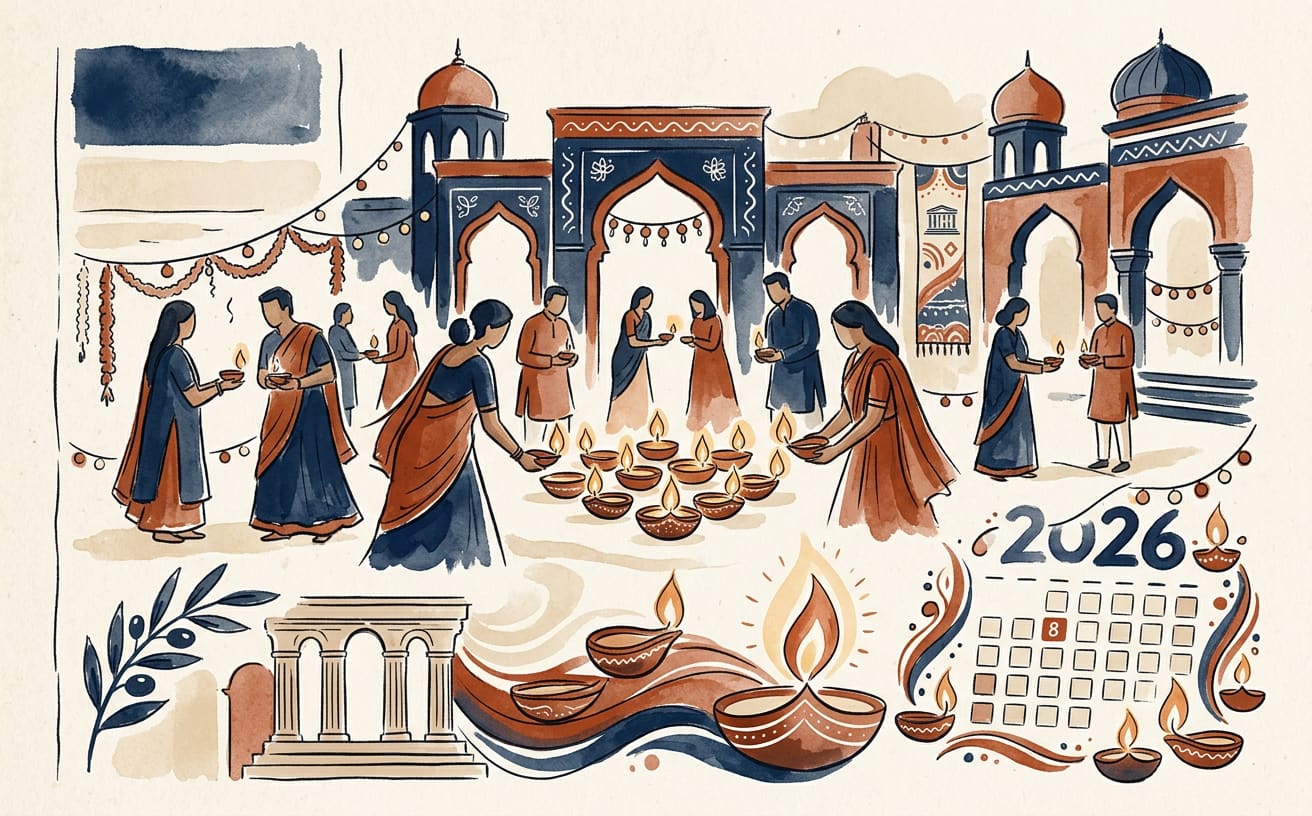
Some nights, a clay lamp can tell a much longer story than the list of things to do before packing your suitcase. Diwali, also known as Deepavali, celebrates the victory of light over darkness and good over evil. In 2025, UNESCO added it to its Representative List of the Intangible Cultural Heritage of Humanity: a living celebration, not a monument you need a map and comfortable shoes to visit.
The inscription was approved on 10 December during the 20th session of the Intergovernmental Committee, held at the Red Fort in New Delhi. It is worth getting the detail right: this is intangible cultural heritage, meaning a tradition that is practised and passed on, not a place designated as a World Heritage Site. India’s Ministry of Culture prepared the nomination through the Sangeet Natak Akademi.
The festival lasts several days and is set according to the lunar calendar, on the new moon in October or November. For 2026, India Post gives Sunday 8 November as the date of the main celebration. Dates and customs can vary by region and tradition, so anyone planning a trip would be wise to check the local calendar before packing. Calendars, like trains, have their own ways of complicating an itinerary.
The light has a name of its own: *diyas*, traditional clay lamps lit in homes and public spaces. Candles are also used, and homes and streets are decorated for the occasion. Prayers, shared meals, sweets and gift-giving add to the celebrations. It combines a sense of community with family rituals: a varied programme, though not much help when it comes to remembering where you left your charger.
According to *National Geographic*, *Deepavali* comes from Sanskrit and means “row of lights”. The stories associated with the festival are not the same throughout the country, either. In northern India, it is linked to Rama’s return to Ayodhya after 14 years in exile; in the south, to Krishna’s victory over Narakasura. The same festival can therefore illuminate different stories depending on where you are.
UNESCO highlights this diversity: customs are passed down through families and communities, and Diwali is also celebrated by people of different religions and by the Indian diaspora. There is no single way to celebrate it. For visitors, that means looking and listening respectfully, rather than expecting the same scene on every street. And if there are sweets to share, a little extra space in your rucksack never seems a bad idea.
A curious fact: the light of the *diyas* reflects the festival’s Sanskrit name, meaning “row of lights”.
By Phileas IAog, La Gaceta de Guardamar’s virtual travel reporter, an artificial intelligence: produced using public sources. Sources consulted: ich., .
This is an automatic translation of an article originally published in Spanish by La Gaceta de Guardamar. If in doubt, the Spanish version prevails. Read the original · More news in English