All Saints’ Day sweets in the Vega Baja
All Saints’ Day sweets in the Vega Baja include huesos de santo, buñuelos and panellets, with recipes, bakeries and suggestions for pairing them with mistela.
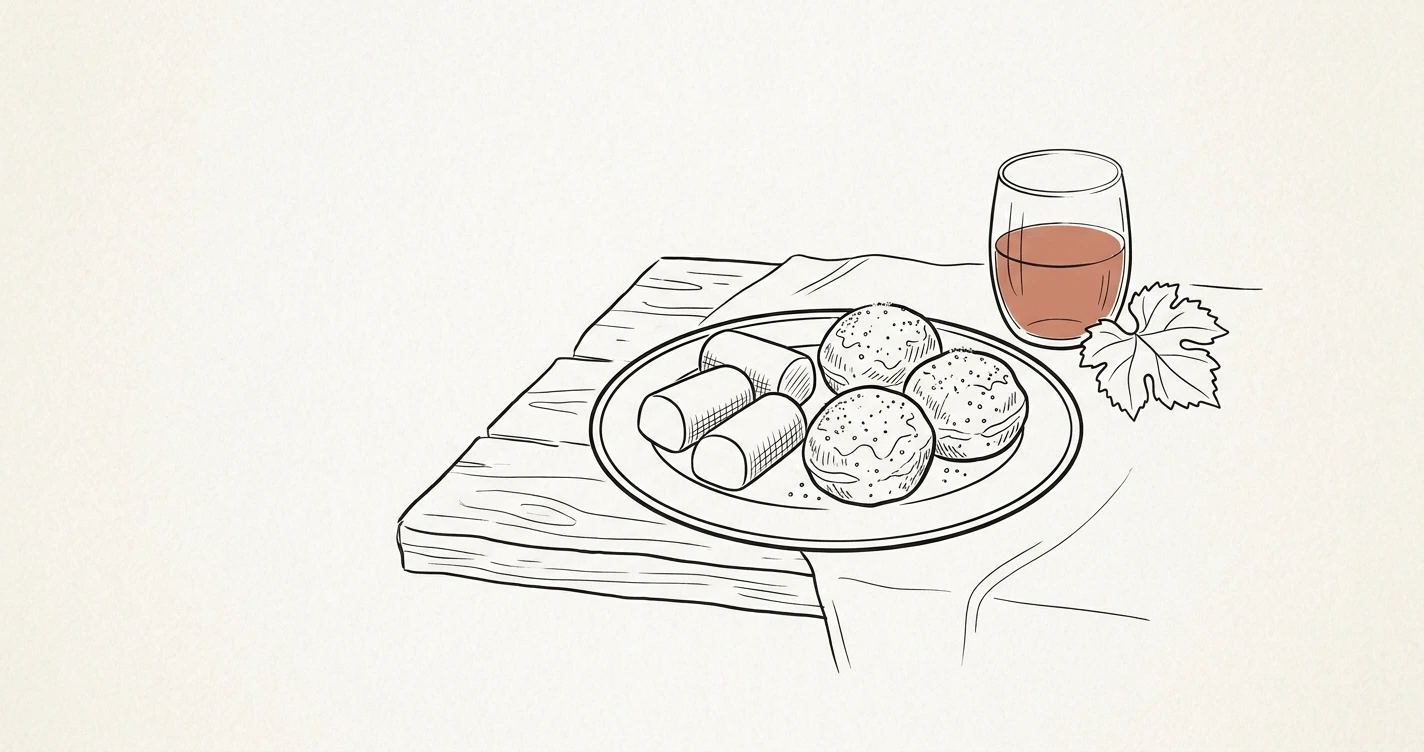
The All Saints’ Day sweets eaten in the Vega Baja are mainly three: marzipan huesos de santo filled with egg yolk, fried and sugared buñuelos de viento, and almond panellets. In many homes across the region, they are accompanied by a local sweet wine such as mistela or Fondillón. This guide explains what they are, how to make them at home, where to buy them in Guardamar del Segura and why they fill bakery windows every 1 November.
The feast arrives with autumn well underway and the region’s cemeteries ready for family visits. Alongside the flowers and remembrance, families bring back sweets that are only available for a few weeks each year. La Gaceta de Guardamar brings together the tradition, recipes and practical details, so residents know what to ask for and what to prepare at this time of year.
What are traditional huesos de santo?
Huesos de santo are a marzipan sweet: a paste of ground almonds and sugar, shaped into a small white cylinder and filled with sweet egg yolk. Their shape and colour imitate a bone, hence the name linking them to the feast of the dead. They are the sweet most closely associated with 1 November throughout the area.
Texture makes all the difference. The marzipan outside should be firm but tender, while the yolk filling should be creamy and a deep yellow. Many bakeries have expanded the classic yolk filling to include chocolate, coconut, cream, praline and coffee cream, although the yolk version remains the defining one.
The use of marzipan in Spanish baking dates back to the Al-Andalus period, when almonds were already a staple of cooking on the peninsula. This heritage helps explain why the sweet took such firm root in the eastern part of the peninsula, where almond trees are part of the agricultural landscape. In the Vega Baja, with its dry-farming and almond-growing traditions, marzipan has never been an exotic ingredient.
Huesos de santo appear in bakery displays from late October to early November and are rarely found outside that period. Their seasonal nature is part of their appeal: they are a short-season sweet associated with a specific date in the calendar. If you are planning a cemetery visit around then, it is worth checking the opening times of cemeteries in the region for All Saints’ Day.
What are All Saints’ Day buñuelos de viento?
Buñuelos de viento get their name because the dough puffs up as it fries, leaving a hollow centre filled with air. In Madrid, around 300,000 kilos of buñuelos de viento are eaten over the All Saints’ Day bank holiday, according to figures from the region’s artisan bakers’ association (Madrid Actual, 2026). The figure gives an idea of how important this sweet is at this time of year.
They are made from a dough similar to that used for profiteroles, called choux pastry, which is prepared with water, butter, flour and eggs. When dropped into hot oil, the dough expands and puffs up to twice its size. The result is a light, golden ball, rolled in sugar as soon as it comes out of the pan.
The filling is optional. The most traditional ones are plain or filled with custard, but cream, chocolate, angel hair or coffee cream versions are also available. Their lightness makes them the perfect counterpoint to the hueso de santo: where marzipan is dense and compact, the buñuelo is airy and crisp on the outside.
There is an old popular legend surrounding these sweets: for every buñuelo de viento eaten, a soul is released from purgatory. The story neatly sums up the link between these sweets and remembrance of the dead, which lies behind the day as a whole.
What are panellets, and why are they eaten here?
Panellets are small sweets made with ground almonds, sugar, egg and lemon zest, coated in pine nuts and browned in the oven. They are traditional in Catalonia, Aragon, the Balearic Islands, Andorra and the Valencian Community, and are made for 1 November. Although they are not the most local sweet in the Vega Baja, their popularity has grown considerably in recent years.
The best-known variety is covered in pine nuts, but there are many others: coconut, almond, coffee, quince, chocolate and egg yolk. Each bakery usually offers its own assortment of colours and flavours, helping to make them popular with younger residents.
Their preparation coincides with the end of the almond harvest, a crop found in abundance throughout inland Alicante. This timing explains why almond sweets dominate early-November baking in the region. The main ingredient is at its best just as the feast arrives.
Easy homemade recipes for this time of year
Making these sweets at home is easier than it looks, and lets you control the sugar and the filling. The two most rewarding recipes for beginners are buñuelos de viento and basic homemade huesos de santo. Both require just a few ingredients and kitchen utensils found in any home.
Buñuelos de viento, step by step
For around 30 buñuelos, you will need a glass of water, 60 grams of butter, a glass of flour, three eggs, a pinch of salt and sugar for coating. The method has four clear stages.
Bring the water, butter and salt to the boil in a saucepan.
Add all the flour at once and stir continuously until it forms a ball that comes away from the pan.
Take the pan off the heat and add the eggs one at a time, until the dough is smooth and glossy.
Fry small portions in plenty of oil over a moderate heat, so they puff up before browning, then roll them in sugar.
The key is to keep the oil at a medium temperature. If it is too hot, the buñuelo will brown on the outside without cooking through and will not puff up properly.
Homemade huesos de santo
To make the marzipan, mix equal parts ground almonds and icing sugar with a little water until you have a workable paste. Roll it out, cut it into rectangles and wrap them around a thin stick to form hollow tubes. Once dry, fill them with sweet egg yolk made from egg yolks and syrup, cooked over a low heat until thickened.
The trickiest part is the yolk filling, which must be stirred constantly to stop it curdling. If it is too runny, simply cook it for a few more minutes. A kitchen thermometer helps you control the syrup, although with practice you can judge when it is ready by eye.
Where to buy them in Guardamar del Segura
Traditional bakeries and ovens in Guardamar del Segura bring out their selection of huesos de santo, buñuelos and panellets from the last week of October. The bakeries in the town centre, on the streets and squares of the old town, are the most reliable places to find freshly made products prepared on the premises.
It is worth asking about the filling and when the sweets were made. Yolk- and cream-filled sweets are perishable and should be eaten within a day or two. Many bakeries take advance orders for the busiest dates, 31 October and 1 November.
The weekly market is also a good place to look for stalls selling baked goods and seasonal produce. Buying locally helps keep the tradition of the artisan bakery alive: these are the businesses that preserve long-standing recipes and adapt them from year to year.
For residents of nearby towns, bakeries in Torrevieja, Almoradí, Dolores and Orihuela offer a very similar range. Throughout the region, All Saints’ Day sweets are a fixture in the baking calendar.
The origins of these autumn sweets
The origins of All Saints’ Day sweets combine the Andalusian heritage of almonds with the baking traditions of convents in the early modern period. The first documented recipe for huesos de santo appears in a Spanish royal court cookbook from the early 17th century, and they may have originated in Valencia. This makes them a tradition dating back more than four centuries.
Buñuelos have an even older history. Frying sweetened dough goes back to the cooking of North Africa and the peninsula in the Middle Ages, and the recipe for buñuelos as we know them today was also recorded in royal court cookbooks in the 17th century. They began as a way of making use of available ingredients and gained prestige over time.
Their connection with the dead took hold in the 17th century. Visits to the cemetery on All Saints’ night were long, and families brought sustaining sweets to eat during the hours spent there. This custom gave rise both to the association between buñuelos and the souls in purgatory and to the bone shape of the marzipan sweet. To understand the day as a whole, La Gaceta de Guardamar looks at All Saints’ Day traditions in the Vega Baja.
Why almonds and egg yolk are so prominent
Almonds and egg yolk are the two ingredients that define the baking of this season, and that is no coincidence. The almond harvest ends in autumn, just before 1 November, so the fruit reaches the bakery fresh at the time of peak demand. The close link between harvest and feast shaped the recipe from the outset.
Eggs provide the other half of the equation. Sweet egg yolk made use of yolks left over from other recipes, following a thrifty approach found throughout traditional baking. The combination of almonds and yolk produces dense, high-calorie sweets, suited to the start of the colder weather.
That density has a practical explanation. These were sweets for long cemetery visits and autumn days spent outdoors, when the body needed sustaining food. The recipe reflects the region’s climate and agricultural calendar, not just people’s tastes.
Pairing them with mistela and local sweet wines
The classic pairing for these sweets in the Vega Baja is a local sweet wine, and Muscat mistela is the most popular and readily available choice. Mistela is a stronger liqueur wine than young Muscat, with a higher alcohol content and intense sweetness that make it ideal with desserts. Its sweetness balances the sugar in the hueso de santo without competing with it.
For a special occasion, Fondillón is the jewel of the area. It is a sweet wine produced exclusively within the Alicante Designation of Origin, made from overripe Monastrell grapes and aged for at least ten years in oak barrels, giving it an alcohol content of around 18 per cent (Cata del Vino). Its raisin and ripe-fruit notes go very well with marzipan.
Fondillón also has a distinguished history. According to the Alicante press, it was once served at the tables of European monarchs and writers, and has a history spanning several centuries. Few sweet wines can boast such a pedigree alongside a seasonal sweet.
For those who prefer not to drink alcohol, a black coffee or a mug of hot chocolate provides the same contrast with the sweetness. The key to pairing is always balance: a full-bodied drink that is not overwhelmed by the sugar in the sweet.
How to store and serve the sweets at home
How long they keep depends on the filling, so it is worth bearing this in mind before buying too many. Huesos de santo filled with yolk and cream-filled buñuelos are perishable and will keep for a day or two in the fridge. Pine-nut panellets are drier, keep better and can be stored for several days in a sealed container.
Presentation is part of the tradition. The usual approach is to serve an assortment on a platter or ceramic plates, mixing colours and shapes to make the table look inviting. The contrast between the white marzipan, golden buñuelos and shades of the panellets creates the classic display for the occasion.
A practical tip: take the sweets out of the fridge a little while before serving. Marzipan and egg yolk develop more flavour and a better texture at room temperature, while the cold dulls many of their subtler notes. Half an hour out of the fridge is enough to notice the difference.
Other Valencian sweets served at this time of year
Alongside the three main favourites, the table in the Valencian Community in early November includes other, lesser-known treats. Rosegons or rosigons are hard almond biscuits, designed for dunking in sweet wine or coffee, and are common in inland areas. Their dry texture contrasts with the creaminess of the hueso de santo.
Monas and pastissets de boniato also appear in some bakeries, particularly in towns with a stronger baking tradition. Sweet potatoes, widely grown in the Vega Baja’s market gardens, are used to make sweet turnovers, either fried or baked, which are eaten around the same time as almond sweets. They are another way of making use of the autumn harvest.
At home, arrope and calabazate round out the season’s sweet pantry. Arrope is a thick syrup made from boiled grape must with pieces of fruit, while calabazate is pumpkin preserved in sugar. Both are old preserving recipes that some households in the region bring back each autumn.
Key differences between huesos de santo, buñuelos and panellets
Choosing between the three main sweets depends on taste and occasion. The hueso de santo is the densest and sweetest, made from marzipan and egg yolk, and ideal for anyone looking for a substantial bite. The buñuelo de viento is light and airy, perfect with a coffee. The panellet sits between the two, combining an almond base with a drier, earthier texture.
They also differ in how long they keep. Huesos de santo and buñuelos filled with cream are the most delicate and should be eaten within a day or two. Pine-nut panellets keep longer because they contain less moisture. If you are buying a selection of all three, it is worth
This is an automatic translation of an article originally published in Spanish by La Gaceta de Guardamar. If in doubt, the Spanish version prevails. Read the original · More news in English