Road conditions in the Vega Baja today
Check traffic conditions in the Vega Baja, congestion on the N-332 and AP-7, roadworks and how to view DGT incident reports.
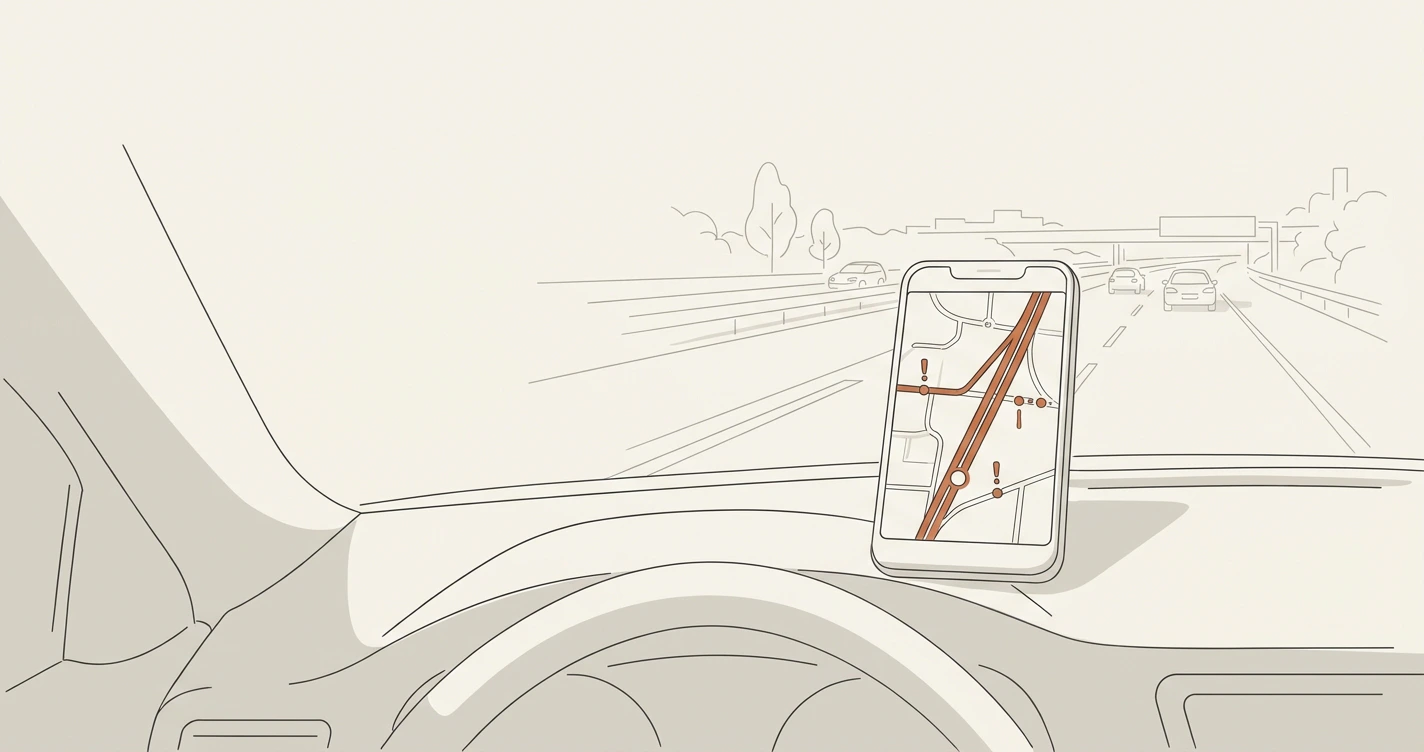
Traffic across most of the Vega Baja is moving normally, with the usual busy spots on the N-332 between Guardamar del Segura and Torrevieja and at the southern AP-7 toll exits. This guide covers the main roads, where queues tend to form and the official tools for checking road conditions in Alicante before setting off.
La Gaceta de Guardamar has brought together this useful information for residents who travel around the comarca every day, visitors arriving on the Costa Blanca and hauliers crossing the province. Traffic conditions in the Vega Baja vary by the hour, so this guide serves as a standing overview and a reminder of the channels that provide up-to-date information.
What are the main routes into Guardamar del Segura?
Three roads carry almost all the traffic entering and leaving Guardamar del Segura: the N-332, the CV-895 and the AP-7. The first is the main coastal route, the second links Guardamar with the inland part of the comarca, and the third is the toll alternative for longer journeys across the province of Alicante.
The N-332 is the coastal trunk road linking Guardamar with Torrevieja to the south and Santa Pola and Alicante to the north. It is the busiest road in the municipality and comes under the greatest pressure in summer and at weekends.
The CV-895 links Guardamar with Rojales, Almoradí and Dolores, carrying traffic from the inland Vega Baja. It is the usual route for people who live in towns in the Bajo Segura and work or shop on the coast.
The AP-7, the Mediterranean motorway, runs parallel to the coast and offers the fastest journeys between the Vega Baja and the rest of the province. Its southern section is tolled, which affects how traffic is distributed across the comarca.
For visitors planning a trip to the area, the best route depends on their final destination within the municipality. The beaches and town centre are reached directly via the N-332, while the inland residential areas are better served by the CV-895. Those planning a day out can also read about what to see in Guardamar del Segura: beaches, dunes and the castle.
Where do queues build up on the N-332?
The N-332’s most frequent queues in the Vega Baja form on the stretch between Torrevieja and Guardamar, particularly at weekends and during the peak tourist season. As the free alternative to the AP-7, it takes some of the traffic avoiding the toll, increasing congestion during the busiest months.
The coastal stretch carries three types of traffic at once: residents travelling between towns, tourists heading for the beach and goods vehicles crossing the province. This mix explains why a road with limited capacity can quickly become congested when several traffic flows coincide.
Roundabouts and access roads to coastal residential areas are key points for traffic flow. A left turn without a dedicated lane or a merge during the rush hour can be enough to cause queues that stretch back for kilometres.
Regular road users know that the busiest times are mid-morning journeys to the beach and late-afternoon trips back. Outside these periods, traffic between Torrevieja and Guardamar flows freely for most of the year.
Rainy days are a recurring problem, as the usual traffic levels combine with slower speeds on wet roads. A stretch that normally takes just a few minutes can take twice as long, especially if this coincides with the school run or the end of the working day.
The CV-895 offers an alternative for residents in the inland area, although it does not replace the N-332 for those heading to the coast. Choosing between the two roads according to your actual destination, rather than out of habit, is the most effective way to avoid predictable queues on the coastal route.
How does the AP-7 toll affect traffic in the comarca?
The toll on the southern AP-7 affects how traffic is distributed throughout the Vega Baja, as many drivers avoid it and add to the traffic on the N-332. The concessionaire AUSUR operates this section under a 50-year concession that expires in 2048, with exits at Los Montesinos and La Zenia, in Orihuela Costa.
On bank holidays and long weekends, queues at the toll barriers at Los Montesinos and La Zenia encourage drivers to seek a free route. This shift of vehicles to the national road is the main reason the N-332 becomes congested just when most people are travelling.
The result is a delicate balance. When traffic on the motorway flows freely and the toll does not put drivers off, the N-332 has room to breathe. When traffic surges on key dates, the national road takes the overflow and queues build up in turn. Understanding this relationship helps drivers choose their route sensibly rather than out of habit.
For longer journeys towards Alicante or Valencia, the motorway remains the fastest option despite the cost. For short trips between towns in the comarca, the ordinary road network offers a toll-free alternative, provided you avoid the busiest times.
How does traffic change in summer and on public holidays?
Traffic in the Vega Baja increases sharply in summer and during major events in the local calendar, when the coastal population swells with the arrival of tourists and second-home owners. From June to September, the roads leading to Guardamar’s beaches and coastal residential areas carry volumes that the ordinary road network was not designed to handle.
Festivals bring specific traffic peaks. Mig Any de Moros i Cristians, the Hogueras de San Juan on the shortest night of the year and summer concerts concentrate journeys into short time windows, with large numbers of vehicles arriving and leaving and causing congestion at roundabouts leading into the town centre.
The weekly market also affects traffic in the municipality. Market mornings attract vehicles from across the comarca and put pressure on parking in the surrounding area, something to bear in mind when planning your route and journey time that day.
The advice for these dates is simple: set off earlier or later than the expected rush hour and, if possible, park in the peripheral car parks and walk the rest of the way. On very busy days, leaving ten minutes earlier can save half an hour in the queue on the way back.
How many incidents does the DGT handle each day?
DGT 3.0 reports around 5,000 incidents a day on Spain’s road network, many generated by drivers’ own connected devices. This figure, published by Revista DGT in May 2026, gives an idea of the volume of information the system processes to provide a real-time traffic map (Revista DGT, 2026).
The scale of the platform is clear from its interaction figures. In September 2025, DGT 3.0 recorded 8,549,066 alerts from recovery vehicles in operation, 790,531 from cyclists, 566,337 from V-16 beacons and 987,781 concerning the protection of vulnerable road users, according to the same source. Each of these signals feeds into the alerts sent to drivers.
The V-16 beacon illustrates the system’s growth. Since the devices became compulsory on 1 January 2025, the number of incidents reported by them rose from 31 on the first day to almost 3,000 on 13 February 2026. The connected network turns every stationary vehicle into an automatic alert for other road users.
For drivers in the Vega Baja, this infrastructure means that a queue on the N-332 or a closure on the AP-7 is reflected in official channels almost immediately. The key is knowing where to look.
How can you check DGT incidents in real time?
The most comprehensive way to check road conditions in Alicante is the DGT’s Infocar map, available at infocar. every day of the year. It shows incidents, cameras, traffic signs and speed cameras using a simple colour code: green for free-flowing traffic, yellow for heavy traffic and red for queues and congestion, according to Revista DGT.
The 011 telephone line is a quick option for anyone who would rather not look at a screen. It operates 24 hours a day, and its operators provide information on road conditions anywhere in the country. It is useful when you are already driving and should avoid distractions.
Social media provides another source of updates. The official @DGTes account posts general alerts, while information channels report specific incidents. Variable-message signs on the roads provide alerts directly to drivers.
The practical advice is to use different channels at different times. Before setting off, the Infocar map provides the full picture; during the journey, 011 and the roadside signs answer questions without taking your eyes off the road. Anyone who drives around the comarca every day can save time by checking conditions before setting off.
This routine goes hand in hand with other useful day-to-day checks, such as the weather forecast, which affects both driving and plans for the day.
What roadworks and maintenance affect roads in Alicante?
In April 2025, the Ministry of Transport awarded a €17.8 million contract to maintain 156 kilometres of state roads in the province of Alicante. The contract covers 80 kilometres of the N-332 between El Campello and Els Poblets, and 74 kilometres of the AP-7 between Oliva and El Campello (Ministry of Transport, 2025).
This covers the northern part of the province rather than the Vega Baja directly, although maintenance work on major routes affects the network as a whole. Maintaining the road surface, signs and drainage systems has a bearing on safety across all connected stretches.
Local roadworks in the comarca vary throughout the year and are usually announced in advance. Scheduled closures, diversions for urban improvements and work on roundabouts are the most common issues on roads into Guardamar and neighbouring municipalities.
The reliable sources for information on each project are the DGT’s updates for inter-urban roads and notices from the town councils for municipal roads. Before travelling on a road affected by works, check the closure times, which may change as work progresses.
Night-time closures are common during line repainting and road-surface repairs, specifically to reduce the impact on daytime traffic. Anyone travelling at night on the N-332 or AP-7 should allow for possible local diversions and lane reductions, which will be signposted in advance.
Roundabouts account for a large proportion of urban roadworks in the comarca. Improving visibility, reorganising approach lanes and installing raised pedestrian crossings are common measures which, while work is under way, call for extra care on roads into Guardamar and neighbouring municipalities.
How can you drive safely on rainy days?
In rainy conditions, the DGT recommends reducing speed, increasing the distance from the vehicle in front and gently testing the brakes at the start of the journey to make sure they are working. Wet road surfaces increase stopping distances, and the risk of aquaplaning rises with speed (DGT, 2026).
Standing water on the N-332 and on stretches of the local road network with inadequate drainage is a known hazard. Driving through a pool of water at speed can cause the tyres to lose contact with the road, leaving the steering temporarily unresponsive.
Visibility is the second factor. Using the windscreen wipers at full speed, keeping the washer fluid topped up and clearing condensation from the windows are basic steps for safe driving in the rain. Dipped headlights make the vehicle more visible to others.
In the Vega Baja, heavy autumn rain calls for extra caution. When water is flowing across the road, it is sensible to leave more time before setting off, choose main roads with better drainage and avoid unnecessary overtaking.
Before driving on a day of severe weather, checking the forecast and sea conditions can help you decide whether to postpone a non-urgent journey.
What precautions should you take in fog in the comarca?
In fog, reduce speed and switch on dipped headlights and front fog lights, never full beams, which reflect off the mist and dazzle the driver. The DGT advises using the road markings on the right as a guide and substantially increasing the distance from the vehicle in front.
In the Vega Baja, fog is most common in the early morning and near the Segura river and agricultural areas, where humidity encourages it to form. Visibility can drop within a few metres on these stretches, reducing the time available to react.
The three Vs sum up the right approach: adjust your speed to the available visibility and the distance from the vehicle ahead. If the fog is so dense that the road is barely visible, the DGT recommends stopping in a safe place off the road until conditions improve.
Sudden manoeuvres are the main mistake in these conditions. Braking sharply or overtaking without clear visibility greatly increases the risk of a multi-vehicle collision, which is particularly dangerous on the comarca’s faster roads.
What useful services should you have to hand when driving?
Before travelling around the comarca, it is worth saving the details of essential services: the DGT’s incident information channel, emergency numbers and the out-of-hours pharmacy in case your journey takes an unexpected turn. The
This is an automatic translation of an article originally published in Spanish by La Gaceta de Guardamar. If in doubt, the Spanish version prevails. Read the original · More news in English