The ñora in the Vega Baja and traditional trade
What the Vega Baja ñora is, how it is grown and sun-dried in the huerta, where to buy it, and its role in local cooking and independent shops.
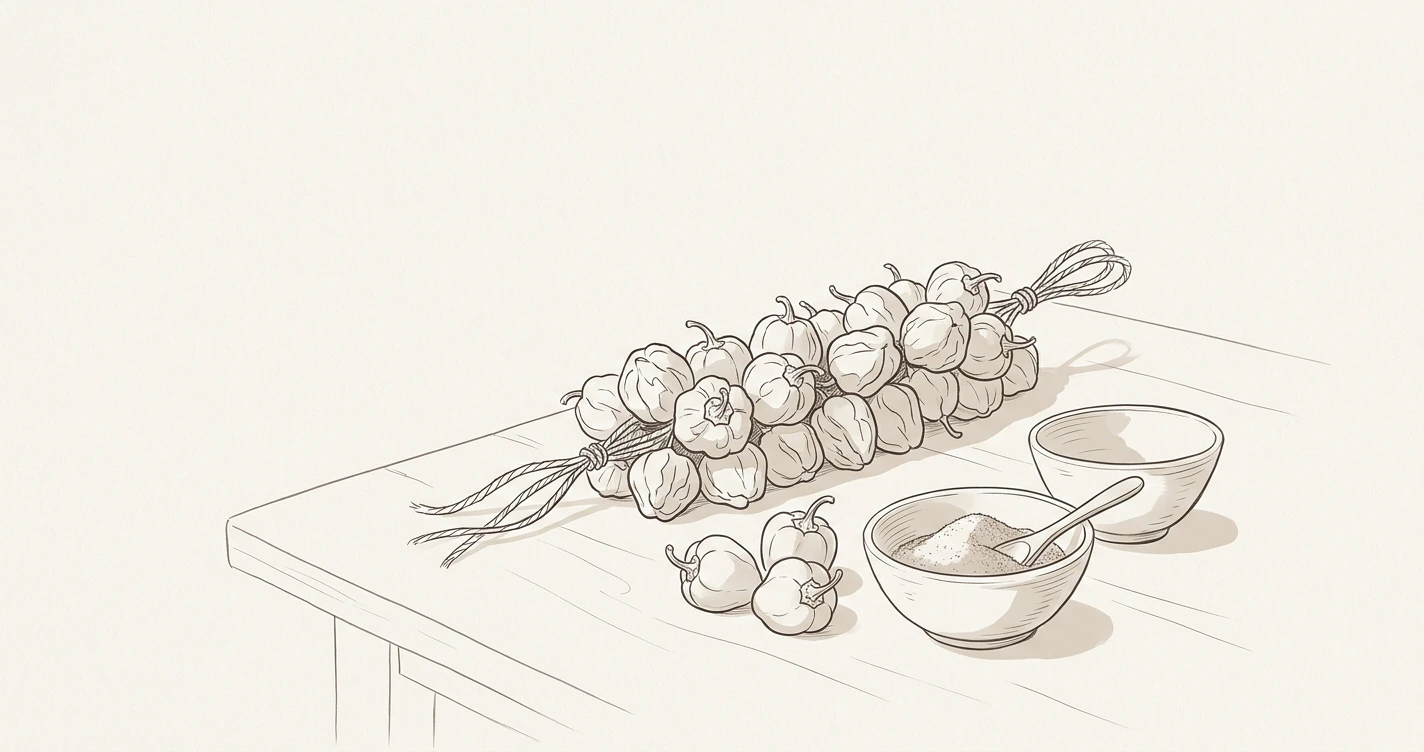
The ñora is a round, sweet red pepper that is dried in the sun and gives colour and flavour to rice dishes, caldero and sauces across the Vega Baja. In Guardamar del Segura and throughout the comarca, this small, wrinkled fruit is still sold in strings, directly from farmer to neighbour—a living example of traditional trade and locally sourced produce.
This feature looks at what a ñora is, how it is grown and dried in the Vega Baja’s huerta, which recipes use it, where to buy it today and why its short supply chain matters to the local economy. The information draws on recent official figures for the paprika sector and on knowledge of south-eastern Spanish cooking.
What is a ñora, and why does it define cooking in the Vega Baja?
The ñora is a pepper of the Capsicum annuum species, Bola variety. It is harvested when fully ripe and dried until crisp. It is not hot. Its value lies in its sweetness, aroma and deep red colour, which it lends to stews and other dishes, making it a cornerstone of the comarca’s cuisine.
It measures between four and five centimetres across and is spherical, though slightly flattened. Once dried, its skin becomes thin and wrinkled. The skin is ground to make paprika, while the rehydrated flesh is scraped out and added to majados (pounded mixtures of ingredients).
The ñora differs from other dried peppers in three ways. Unlike bird’s-eye chillies or cayenne, it is not hot. Compared with the northern Spanish pimiento choricero, it is rounder and sweeter. And unlike Extremadura’s smoked pimentón de la Vera, ñoras from the south-east are sun-dried without smoke, giving them a cleaner, fruitier profile.
The name varies by region, although the fruit is the same or very similar. In Murcia and Alicante it is called ñora; in Catalonia, nyora. Alongside the Bola variety, other traditional paprika pepper varieties grow in the south-east, including Tres Cascos, Ramillete and Albar, each with its own nuances of colour and sweetness. This varietal diversity is part of the agricultural heritage that the comarca’s huerta has managed to preserve.
Growing ñoras in the Vega Baja’s huerta
The annual ñora-growing calendar is shaped by sunshine and water from the irrigation channels. Seeds are sown in seedbeds between February and March, the plants are transplanted into the fields in May, and the hand harvest takes place mainly in September and October, when the fruit is fully red.
Traditional irrigation through acequias (channels), inherited from the Andalusi system, carries water from the Segura through the Vega Baja’s huerta. This system, together with low humidity, long hours of sunshine and sea breezes, creates an ideal microclimate for a pepper that needs time to ripen and must then dry without rotting.
The revival of the crop is also reflected in the figures. Yields per hectare for peppers grown for paprika rose by 58% between 2018 and 2024 in the Region of Murcia, according to figures from the Regional Ministry of Agriculture reported by Murciadiario in September 2025. This productivity increase helps explain why many farmers in the south-east have turned their attention back to this fruit.
Growing ñoras calls for skill. The plants are vulnerable to late spring frosts, so transplanting is not brought forward, even when there is a desire to harvest early. In summer, farmers manage irrigation so the fruit can grow without splitting, and watch out for pests such as whitefly and aphids, which thrive in the heat. Each ñora is picked by hand, one at a time, because machinery would damage the skin that must later be dried intact.
Sun-drying: the string hanging from the façade
Drying is the stage that turns the pepper into a ñora. It takes place outdoors over ten to fifteen days. The fruit is threaded onto strings and hung on façades, porches and drying racks facing south, where it gets direct sunlight until the skin is wrinkled and crisp.
The sight of a string of red peppers hanging from a whitewashed wall is part of the huerta’s autumn landscape. It is not decoration. This traditional preservation method keeps the peppers from spoiling for months and preserves their colour and aroma.
The process needs careful attention. If it rains or humidity rises, the ñoras can go mouldy before they are dry. Vega Baja producers therefore make the most of the dry, sunny weather at the end of summer, when the last settled days before winter allow the peppers to dry evenly without disruption.
From fruit to paprika: how ñoras are ground
Much of the dried ñora crop ends up ground into paprika, the red powder used to season cured meats, rice dishes and stews. Pepper milling in the south-east of the Iberian Peninsula is a centuries-old trade, and today it handles a significant volume of produce in the Region of Murcia.
Paprika production in the Region of Murcia reached 4,027 tonnes in 2024, 18% more than the previous year, according to figures from the Regional Ministry of Agriculture reported by Murciadiario in September 2025. This is not a one-off increase: total production has multiplied since 2018, rising by 152% over six years.
The trade has deep roots in the area. According to Región de Murcia Digital, during the 19th and 20th centuries, pepper growing for paprika became the leading economic activity in the region, ahead of silk and citrus, with close to 80% of farmers involved in it. That farming heritage is still present in the neighbouring Vega Baja comarca.
The Designation of Origin and protection for producers
The Protected Designation of Origin Pimentón de Murcia is the label certifying the origin and quality of paprika made from the Bola variety. Its Regulatory Council sets the rules for growing, drying and milling, and protects local farmers from blends of questionable origin.
There is real institutional support. The regional administration awarded a grant of €26,407 to the PDO Regulatory Council in 2024, according to figures from the Regional Ministry of Agriculture reported by Murciadiario. This funding supports the inspection and promotion work that adds value to certified paprika.
For local residents, the label offers reassurance. Paprika covered by the PDO guarantees that the peppers come from the south-east, have been sun-dried and have been ground without additives. The mark justifies a slightly higher price and returns some of that extra margin to farming in the comarca.
Majado and picada: ñoras in the mortar
The ñora is at its best whole in the mortar, pounded with garlic, almonds and parsley to add body to stews. This mixture, called picada in many kitchens in the east of Spain, thickens the stock and concentrates the flavour without the need for flour or artificial thickeners.
To use a ñora, split it open, remove the seeds and soak it in lukewarm water, or fry it briefly in oil, taking care not to burn it and make it bitter. Then scrape out the flesh or pound the whole pepper. A couple of ñoras are enough to turn an ordinary sofrito into the aromatic base of a rice dish.
This technique is common across south-eastern Spanish cooking. In all i pebre eel stew, caldero fish stew and rice dishes made with huerta produce, ñora majado is the starting point. Cooks in Guardamar know that without the red flesh scraped into the mortar, the dish loses depth.
Traditional recipes with ñora in Guardamar and the comarca
Vega Baja recipes with ñora revolve around rice and fish, two staples of the local larder. Caldero from the Mar Menor, arroz a banda and majado sauces are the dishes in which ñora stands out most clearly.
In caldero, ñora is part of the majado that gives colour and depth to the rock-fish stock, served first with rice and then with the fish. In arroz a banda, it provides the golden hue and flavour that distinguish Alicante-style fish stock. In all i pebre, it is pounded with garlic to cook eel from nearby wetlands.
Ñora also crosses regional borders. Catalan romesco and salvitxada sauces combine it with almonds, hazelnuts and tomatoes to accompany calçots and fish. Its versatility keeps it on restaurant menus, and it is worth remembering that anyone looking for rice and caldero in Guardamar del Segura is, in effect, looking for dishes made with ñora at their heart.
The huerta also produces stews that are less well known outside the comarca. Gachas and gazpachos de pastor use ñora to add colour and sweetness to dishes made with pulses and flour, once a staple for farm labourers. In winter kitchens, a couple of pounded ñoras lift a chickpea stew or a soupy rice dish with meatballs, showing that the fruit is not just for fish.
Where to buy ñoras: markets, cooperatives and local grocers
In the Vega Baja, ñoras are sold at weekly markets, agricultural cooperatives and neighbourhood grocers. Many stalls still sell them in strings or by the piece, directly from farmer to customer, without intermediaries.
The market is the first stop for anyone looking for fresh, seasonal produce. Vegetable stalls often have dried ñoras in autumn and winter, alongside garlic and herbs, and customers can ask the seller where they came from and when they were harvested. For guidance on the day and opening hours, see the Guardamar market guide: day, opening hours and what to find.
Local grocers and cooperatives offer more choice. They sell ñoras loose, in bags or already ground into paprika. The Protected Designation of Origin Pimentón de Murcia certifies the origin and quality of the ground product, a guarantee that protects local producers from blends of questionable origin.
When buying, check how they look. A good ñora is bright red, not dull or brown, and bends without crumbling, which shows it still has some flexibility. If it is brittle and lacks shine, it has been stored for too long and will have lost its aroma. It should smell sweet and fresh, never musty. Asking the market seller when it was harvested helps you avoid buying produce from the previous year.
What is traditional trade, and why does it sustain the ñora?
Traditional trade is the network of markets, cooperatives and neighbourhood shops that keeps the supply chain short between field and table. This is the model that sustains the ñora, a product that loses its commercial value when it is separated from its territory and direct sales.
The strength of traditional trade lies in personal service and knowledge of the product. The shopkeeper knows where the ñoras came from, which harvest they were dried in and how to use them in cooking. This information, which large retailers do not provide, is part of what customers pay for when they choose a local grocer rather than a supermarket shelf.
This network also brings the streets to life. Local shops help people put down roots, create local jobs and play a part in the town’s festivals and events calendar. Those browsing Guardamar’s events calendar will often find fairs and food events where traditional trade and huerta produce share the spotlight.
The value of local produce and km0
Local produce is grown, processed and sold within a short radius, usually less than a hundred kilometres. The ñora fits that definition perfectly: it is grown in the huerta, dried in the same comarca and sold at the village market.
Buying locally has tangible effects. It cuts transport and, with it, the food’s carbon footprint. It leaves the profit in the farmer’s hands rather than the logistics chain. And it preserves native varieties such as Bola, which might otherwise disappear in favour of crops that are more profitable in the short term.
Local produce also protects the landscape and culture. Keeping ñoras in production means keeping the huerta irrigated, the acequias clear and strings of peppers hanging from façades in autumn. It is a way of caring for the Vega Baja’s farming heritage while eating well.
There is also a case for flavour. A ñora that travels only a few kilometres and is dried in the comarca’s sun keeps aromas that are lost in rapid industrial drying. Consumers comparing artisan paprika with paprika of unknown origin will often notice the brighter colour and fuller sweetness. In practice, that quality is the best ally of local trade.
How to store and use ñoras at home
Dried ñoras keep for months in a cool, dry, dark place, away from the damp that can spoil them. Stored in a glass jar or a cloth bag, they retain their colour and aroma until the next harvest, making them a ready source of flavour in the kitchen.
Before cooking, soak them in lukewarm water for fifteen to thirty minutes, then scrape out the flesh. If you are short on time, fry each side for a couple of seconds in oil that is not too hot, taking care not to burn them, as a burnt ñora will make the whole dish bitter. Pound the flesh and add it to the sofrito.
A local tip helps make them go further. Ñoras that have split or broken can be ground at home to make an intense, additive-free paprika. This red powder seasons potatoes, pulses and stews throughout the winter, making use of every last pepper on the string.
The ñora as a hallmark of the Vega Baja
The ñora is more than an ingredient: it is a shared hallmark of the Vega Baja and the south-east of the Iberian Peninsula. It links the huerta of Guardamar with those of Murcia and Catalonia through the same red fruit, and it
This is an automatic translation of an article originally published in Spanish by La Gaceta de Guardamar. If in doubt, the Spanish version prevails. Read the original · More news in English