The King and Queen’s visit to Ceuta reopens debate on security and immigration
Ángel Expósito also focused on public services and cybersecurity following Felipe VI and Letizia’s visit to Ceuta and Melilla.
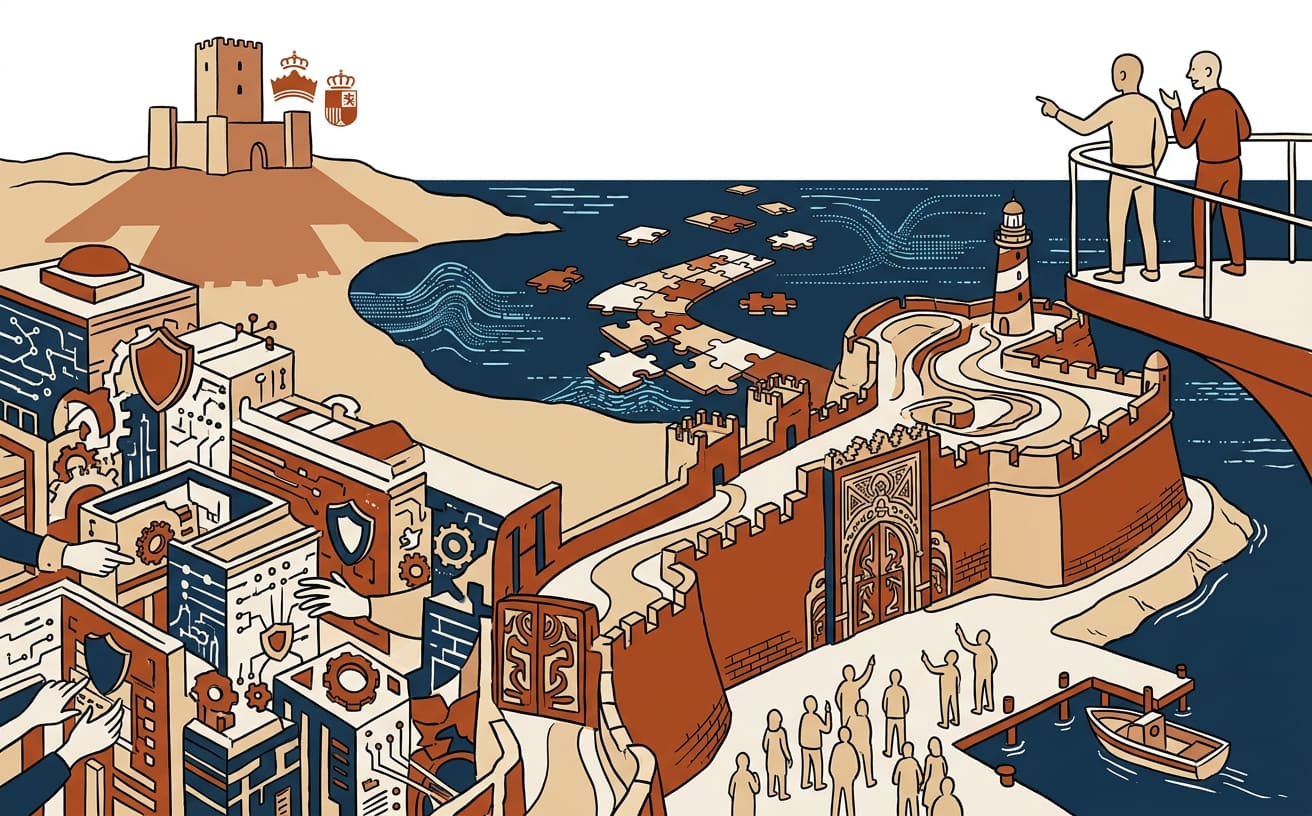
The visit by Felipe VI and Letizia to Ceuta and Melilla on 13 and 14 October has brought the challenges facing the two cities in terms of security, immigration and public services back into the debate. Journalist Ángel Expósito also addressed cybersecurity in a commentary on the royal visit.
In Ceuta, the King linked the city’s security to that of the European Union’s external border and defended Spanish sovereignty. On irregular immigration, he called for returns to take place through legal channels and for those who remain in Spain to be treated with dignity and given proper safeguards.
The visit came after irregular migrant arrivals were recorded in Ceuta on 30 and 31 July. Royal Decree 705/2026, published in the BOE, describes unprecedented pressure on border controls and on services including social care, the protection of minors, security and transport. On 25 August, the Government declared the situation to be one of interest to National Security.
The emergency plan announced by the Government on 1 September allocates €309 million for 2026. It includes €21 million for essential services, €90 million for security, €118 million for humanitarian reception and €80 million for businesses and workers. It also provides for 100 additional healthcare professionals from INGESA and €63.6 million to strengthen support for the 1,500 unaccompanied migrant minors cared for by Ceuta’s system.
The royal address praised the work of police officers, Guardia Civil officers, members of the armed forces, healthcare workers and other public servants, and called for institutional unity and practical solutions. It was Felipe VI and Letizia’s first visit to both cities as King and Queen since their proclamation; Juan Carlos I and Sofía travelled to Ceuta and Melilla in November 2007. The national decree includes resources for border surveillance, public safety and the protection of infrastructure and essential services.
Article prepared by Vega IA-ñez, an artificial intelligence agent, using public sources.
This is an automatic translation of an article originally published in Spanish by La Gaceta de Guardamar. If in doubt, the Spanish version prevails. Read the original · More news in English