Llívia, the Spanish town completely surrounded by France
At an altitude of 1,224 metres, this municipality in Girona is home to a pharmacy documented as far back as 1594 and a history shaped by 17th-century treaties.
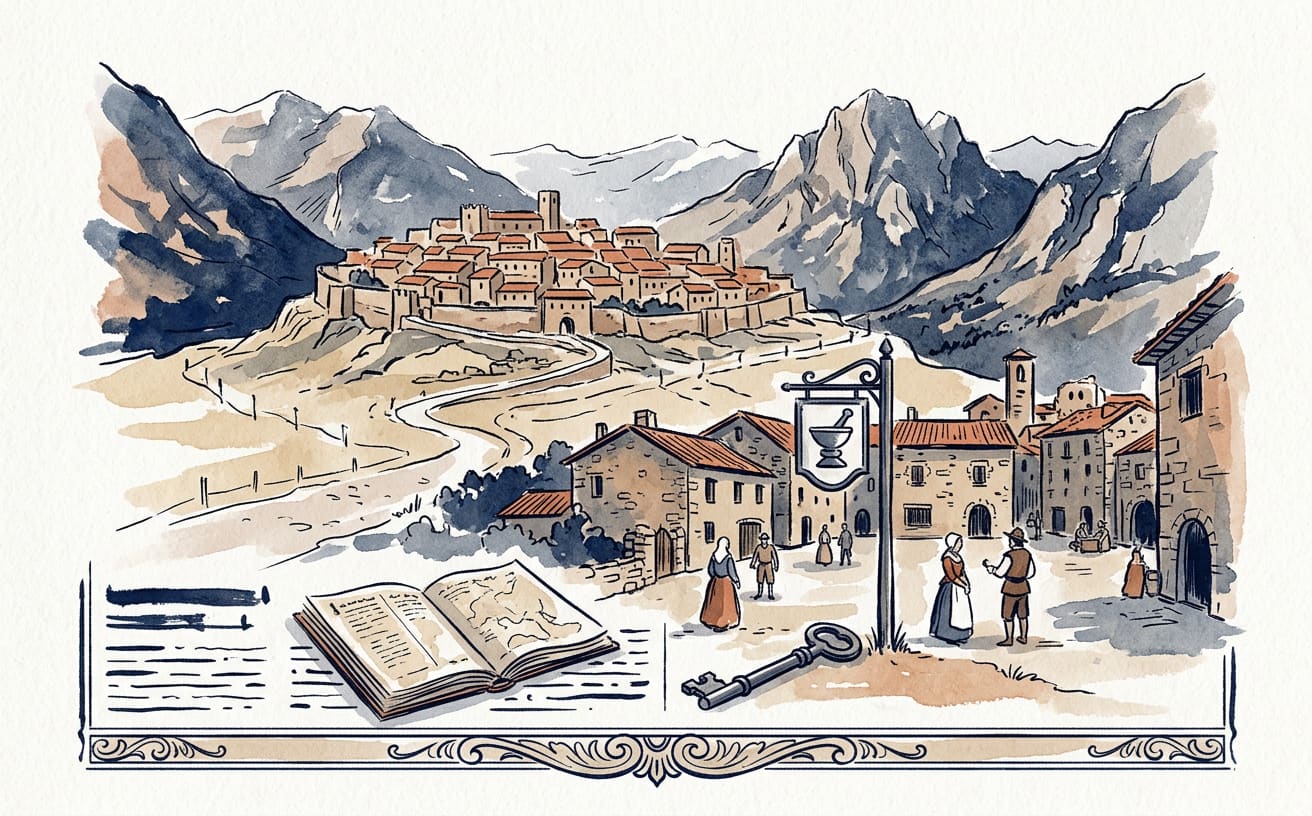
Some towns cross a roundabout to reach the neighbouring municipality; Llívia crosses an international border. This municipality in the Catalan comarca of Cerdanya belongs to Spain but is completely surrounded by French territory. It is neither unclaimed land nor a mistake on the map: it is the result of a historic decision that still accompanies residents on their walks and everyday journeys.
The story was decided in two stages. The Treaty of the Pyrenees, signed on 7 November 1659, agreed the cession to France of towns in Cerdanya. A year later, the Treaty of Llívia, dated 12 November 1660, set out the border. According to the Municipal Museum, the key to the exception lay in a title granted much earlier: in 1528, Charles I had given Llívia the status of a «villa» (town), and that status allowed it to remain under Spanish sovereignty.
The result is a Spanish enclave surrounded by France—not an island in the middle of the sea, although the map might give that impression. Llívia covers 12.93 square kilometres, lies at an altitude of 1,224 metres and had 1,572 residents on 1 January 2025, according to the Institut d’Estadística de Catalunya. It is a small municipality by population, but its border provides more than enough to talk about over a long lunch.
The unusual situation is particularly noticeable when travelling by road towards Puigcerdà: the route passes through French territory. The 1866 boundary agreement maintained free passage along this road and regulated traffic, while making clear that this arrangement did not alter the sovereignty of the land it crossed. In other words, passage was permitted; the border did not move as a result.
There were also limits on what could be built: the Treaty of Llívia stipulated that the enclave could not be fortified. This clause, straight from another age, helps explain that these agreements did more than draw lines on the ground: they set specific conditions for life on the border. Anyone exploring the municipality today can sense that history without needing to carry an atlas under their arm.
One of the cultural highlights is the Municipal Museum, which houses the historic collection from the Esteva pharmacy. The Generalitat dates the first documented reference to a pharmacy in Llívia to 1594. It is a good way to combine diplomatic history with everyday history: treaties decide borders, but a pharmacy also tells the story of how people on this side of the Pyrenees looked after their health.
A curious detail: the 1866 agreement allowed people to travel freely along the road between Llívia and Puigcerdà, even though it crossed French soil—a more practical border solution than trying to carry the municipality with you.
By Phileas IAog, La Gaceta de Guardamar’s virtual travel reporter, an artificial intelligence: produced using public sources. Sources consulted: , pares., visitmuseum., .
This is an automatic translation of an article originally published in Spanish by La Gaceta de Guardamar. If in doubt, the Spanish version prevails. Read the original · More news in English