Not everything comes in a click: how to teach our children to wait and cope with difficulties
Inma González Aracil, a psychologist in Guardamar del Segura, shares practical ideas to help children wait, find their own ways to play and cope with things they find difficult. Drawing on everyday situations, she suggests giving them the support they need while allowing them space to build independence and confidence in a world where many things happen instantly.
“Alexa, play my favourite song.” And it starts playing. We finish one episode and the next is ready to go: we can even watch a whole series in an afternoon. We buy something from the sofa and have it delivered to our home. And if we don’t like a video, we swipe and another one appears.
These are conveniences enjoyed by young and old alike. We’ve got used to many things arriving straight away, with hardly any waiting. But learning to ride a bike, solve a problem or accept that something hasn’t gone the way we wanted still takes time and practice.
Our children are growing up in a world that offers instant answers, while developing skills that can’t be acquired overnight.
From an early age, they need experiences where not everything happens straight away. These small opportunities help them discover that they can look for alternatives, manage frustration and find solutions. The way we support them has a lot to do with it.
How can we do this at home? Here are three everyday situations, particularly common among children of infant and primary school age. Always take their age and needs into account.
“I’m bored”: when there’s no instant entertainment
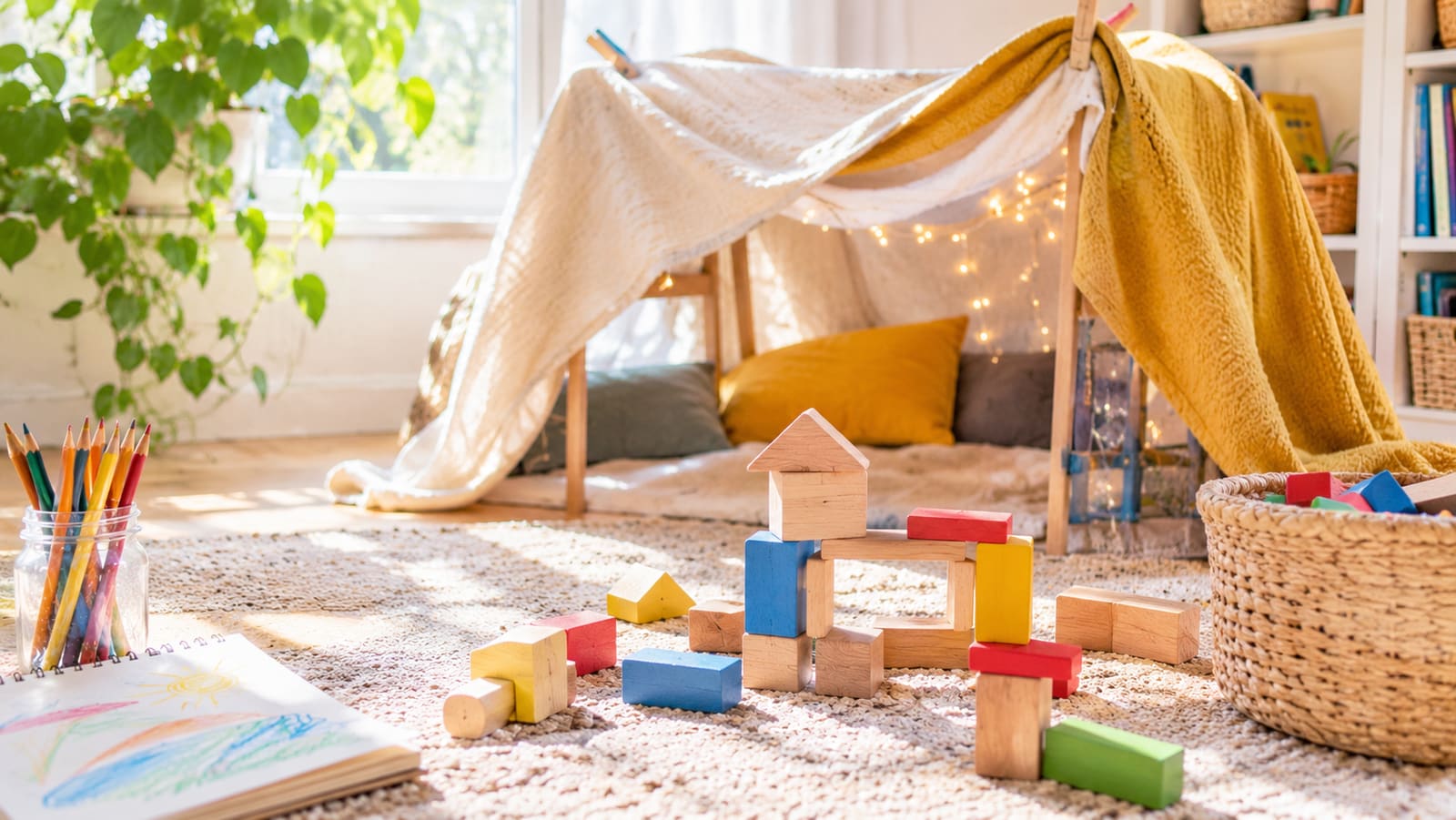
It’s Saturday afternoon. Your child says they’re bored. You suggest drawing, reading or getting out the building blocks… but none of it seems to appeal. You might end up saying: “With all the toys you’ve got!” But having lots of things doesn’t mean knowing what to do with them.
We’re so used to finding entertainment straight away that, when no interesting activity presents itself, it’s tempting to look for something else immediately. But boredom matters too.
It creates space for imagination, free play and children’s own ideas to emerge. Many of the best games begin with “I don’t know what to do”. Learning that there doesn’t always have to be something to do is important too. It helps children take the initiative, discover what interests them and find their own ways to keep themselves occupied.
Sometimes, behind “I’m bored” is a wish for company; at other times, it’s simply hard to know where to start. A straightforward question can help us work out which: “Would you like us to do something together, or can’t you think of a game?”
If your children need help getting started, all it takes is a small suggestion: “Shall we get the modelling clay out or make a den with the sheets?” Perhaps all that’s needed is to put the first sheet in place together and let the rest of the game take shape through their own ideas.
And if none of the suggestions appeal, it’s perfectly fine to say: “I understand that you’re bored. I need to finish this now. You can think about what you’d like to do and tell me afterwards.”
Supporting them through boredom and giving them time to discover what they’d like to do is also a way to encourage their independence and trust in their ability to come up with their own ideas.
“I want it now”: learning to wait in a world of quick answers
We’re getting dinner ready when our child calls from the living room: “Come and look at what I’ve done!” We reply, “Just a minute”, but soon hear again: “Are you coming now?”
That “minute” that seems so clear to us can feel endless to them. Young children are still learning to understand the passage of time and manage the desire to have something immediately.
Rather than repeating “wait”, it helps to say clearly when it will be their turn: “I’m going to put the tray in the oven, and then I’ll come and have a look with you.” And when we’re done, follow through. That way, children learn that we still have them in mind while they wait.
Other waits are part of life: a doctor’s appointment, a car journey or taking turns in a board game. They’re not always entertaining, and they don’t have to be.
In these situations, it’s also important to give children the chance to experience short waits without always reaching for a screen. That way, they discover that they don’t need to be entertained every moment.
Sometimes, all it takes is a conversation, looking at what’s around us or simply being together. If the wait is a long one, bringing a storybook or a simple game can help.
And when they protest, we can acknowledge how they feel while sticking to the limit: “I know you’re really keen to roll the dice. It’s your sister’s turn now, and then it’ll be yours.”
Patience doesn’t develop just because we tell children to be patient. It grows through small experiences, support and time.
It’s also worth remembering that tiredness, hunger or a need for comfort make waiting harder. Not every moment is right for practising.
“I can’t do it”: learning to try a different way
The tower falls down for the third time. The pieces are pushed aside and we hear: “I can’t do it! I don’t want to any more!”
When we’re used to getting quick results, facing something that takes several attempts can be especially frustrating. But learning involves making mistakes, finding out what doesn’t work and trying other solutions.
Our first instinct might be to rebuild the tower to spare them the upset, or encourage them to keep going: “Come on, try again.”
But repeating the same thing doesn’t always help. We can go over and ask: “That’s frustrating, especially after you’d made it so tall. Would you like us to work out together why it keeps falling?”
Perhaps the smaller pieces at the bottom can’t support the weight. If we try using larger ones and let them carry on, they’ll have the chance to discover a solution.
When the tower stays up, instead of just saying “Well done!”, we can point out: “You changed the pieces at the bottom and now it’s staying up.” That helps them recognise what worked and use it on another occasion.
Homework is much the same. When they say, “I don’t know how to do it”, instead of replying, “Come on, you know this”, it’s more helpful to ask: “Show me where you got stuck.” Sometimes reading the instructions together or helping them take the first step is enough for them to carry on by themselves.
And if they’re so upset that it’s hard to keep going, taking a break can help too. It’s a chance for them to discover that when something doesn’t go as they expected, there are different ways to cope: try another approach, ask for help or take a rest before having another go.
Learning takes time, for us too
In everyday life, we don’t always have the patience or time we’d like. Some afternoons we manage to support our children calmly; on others, the rush leads us to sort things out for them.
It’s enough to make use of the opportunities everyday life offers, without turning every moment into a lesson.
Our children learn by watching us too. When we say, “This recipe isn’t turning out as I expected; I’m going to check the steps”, or “I’m getting stressed; I need to stop for a moment”, we show them how we deal with our own difficulties.
We live surrounded by instant solutions, but some things can’t be learnt by taking shortcuts. Confidence grows through small experiences: finding an idea for a game, waiting for a turn or solving something that once seemed impossible.
Our role isn’t to shield children from every difficulty or expect them to deal with everything alone. It’s to give them opportunities and the help they need to discover what they can do.
Because some of the most important things don’t come in a click. They’re learnt little by little, by trying, making mistakes and trying again, with someone close by to turn to.
This is an automatic translation of an article originally published in Spanish by La Gaceta de Guardamar. If in doubt, the Spanish version prevails. Read the original · More news in English