What to see in Guardamar del Segura: beaches, dunes and castle
What to see in Guardamar del Segura: Blue Flag beaches, 800 hectares of pine forest, the Rábita Califal and the castle, with visiting tips.
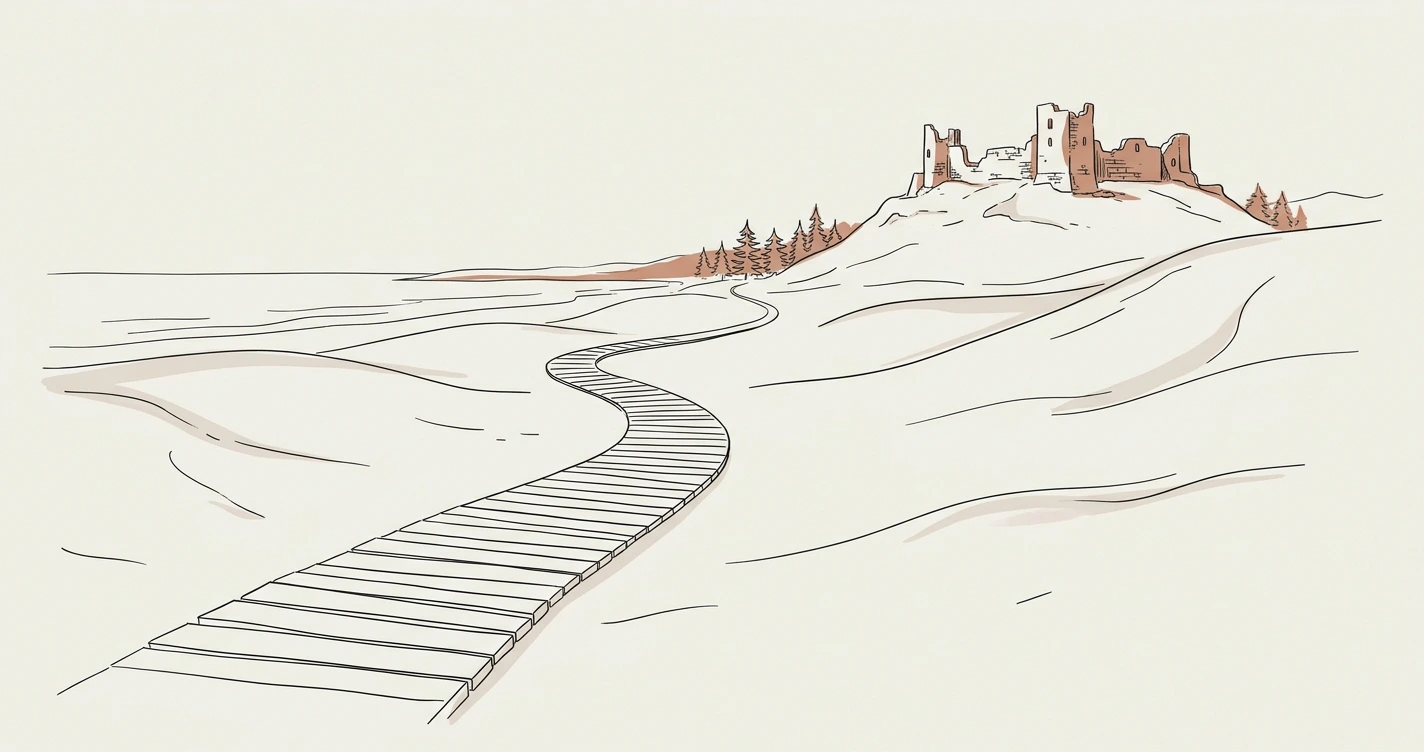
Guardamar del Segura brings together three very different landscapes within a few kilometres: long Blue Flag beaches, a pine forest growing on dunes and a historic heritage that includes a castle and a 10th-century Islamic archaeological site. Visitors wondering what to see in Guardamar del Segura can combine swimming, nature and culture in a single day, with almost everything within walking distance of the town centre.
The municipality, with a population of 18,564 according to the 2025 census, lies at the mouth of the River Segura, in the Vega Baja district in the south of Alicante province. This guide covers its main attractions, with practical details, approximate opening times and routes to help you plan your visit.
The municipality’s best beaches
Guardamar del Segura had five Blue Flag beaches in 2025: Centre, La Roqueta, Moncayo, Vivers and Ortigues-Campo (Vega Baja Digital, 2025). The coastline stretches for several kilometres, with fine sand and shallow water, making it convenient for families.
Playa Centre, also known as Babilonia, is the closest beach to the town centre. It has a promenade, sunloungers, showers and adapted access. It is a practical choice for anyone arriving without a car who wants to swim close to the town’s bars and shops.
Further south are La Roqueta and Moncayo, bordered by pine forest. They are quieter beaches, with natural shade beneath the pines and beach bars during the season. Three of the municipality’s beaches—Centre, La Roqueta and Moncayo—have held Blue Flag status for sixteen consecutive years.
To the north, Playa dels Vivers received the award in 2015, while Ortigues-Campo gained it for the first time in 2025. These are wider, more open stretches of beach, ideal for a walk outside the summer season. Before heading down to the sand, it is worth checking the sea conditions and the local weather forecast.
Each beach has its own character. Babilonia has the services and atmosphere; La Roqueta and Moncayo offer pine trees and shade; Vivers and Ortigues-Campo give you room to walk. This variety makes it easy to choose according to your plans: a quick swim in the centre or a long, quiet morning in the north.
The pine forest and dunes: a protected natural treasure
Guardamar’s pine forest covers around 800 hectares of pines, palms and eucalyptus, with more than 600,000 trees planted (Guardamar Turismo, consulted in October 2026). It is one of Spain’s largest planted coastal forests and protects the town from sand that once advanced unchecked.
This landscape was created through an engineering project. In the late 19th century, the dunes moved inland by as much as eight metres a year, and by around 1896 they had already buried a block of houses in the north of the town. The reforestation project was approved in 1897, and planting continued from 1900 until the 1930s.
The project’s technical lead was forest engineer Francisco Mira y Botella, whose work stabilised the dunes and created today’s forest. The species chosen—Aleppo pine, stone pine, date palm and eucalyptus—adapted well to the sandy soil and sea breeze.
Today, the pine forest is a Site of Community Importance within the Natura 2000 network. It has marked trails, recreational areas with tables and direct access to the beaches through the forest. It is an ideal place to walk, run or cycle in the shade during the hotter months.
A green lung between the town and the sea
The forest acts as a natural barrier and as a much-used leisure area for local residents. The moving dunes, once a threat, have been stabilised by the vegetation cover. Walking along the paths offers a close-up look at how the sandy landscape and pine forest exist side by side.
The pine forest is also home to wildlife typical of the Mediterranean coast, including birds that shelter among the trees. The recreational areas have tables, fountains and shaded spots, making them suitable for spending the day. In summer, the forest stays cooler than the open beach.
Trails and activities in the pine forest
The routes are marked and mostly flat, making them suitable for walking, running and cycling. Several sections connect directly to the beaches, so you can combine a walk in the forest with a swim in a single outing. Information boards explain the history of the reforestation and the area’s ecological importance.
For families with children, the pine forest is a safe and rewarding option, with shade, open space and soft ground. Comfortable shoes and water are recommended, as some stretches are a distance from the main access points.
The Rábita Califal, a unique archaeological site
Among the dunes stands the Rábita Califal, founded in 944. This Muslim religious complex is considered the only Umayyad ribat in the peninsula to have survived virtually intact (Guardamar Turismo, consulted in October 2026). Its discovery was linked to the work to replant the pine forest.
The site consists of twenty-three prayer cells, two auxiliary rooms and a mosque. These structures were places for retreat, prayer and coastal surveillance. The foundation inscription, discovered in 1897, established the site’s origins in the year 333 of the Hijra.
The Rábita was declared a Site of Cultural Interest, in the Archaeological Zone category, on 27 July 1990. The original stone bearing the inscription is held at the Murcia Archaeological Museum, while a replica can be seen at the site.
The discovery was made in 1897, during the same pine-forest replanting work that stabilised the dunes. The cells and mosque that visitors can explore today were found beneath the sand. The complex’s preservation, protected for centuries by the dunes themselves, explains how it has survived almost intact to the present day.
What a ribat was
A ribat was a fortified site with a religious and military purpose. The men who lived there combined prayer with keeping watch over the coast against attacks from the sea. In Guardamar, this dual role explains the layout of the complex: small cells for retreat and a communal mosque.
Visiting the Rábita helps you understand Guardamar before modern reforestation, when the coastline was a frontier area. The information boards at the site give a straightforward account of its history, without technical jargon.
The castle and fortified enclosure
Guardamar Castle stands on the hill overlooking the town and was declared a Site of Cultural Interest in 1985 (CastillosNet, consulted in October 2026). From the top, there are some of the best views of the coastline, the mouth of the Segura and the pine forest.
The site retains sections of wall, towers and the remains of the old medieval settlement. For centuries, the historic town stood within these walls, on the hillside. Today, the complex is an open viewpoint and a site of archaeological interest.
Entry is free and access is open during the day. Among the remains, you can make out the foundations of houses, cisterns and sections of the wall that protected the settlement. Archaeological work over recent decades has uncovered different phases of occupation, from the Andalusi period to the Modern Age.
The 1829 earthquake that changed the town
The castle and old Guardamar were left in ruins by the earthquake of 21 March 1829, which had an estimated magnitude of around 6.6 and shook the Vega Baja. The earthquake destroyed much of the buildings on the hill and forced the town’s location to be reconsidered.
After the disaster, the town was rebuilt to the east of the hill, following a Neoclassical grid plan. The reconstruction project became a model for urban planning after a disaster in Spain. This is why the present-day town centre has wide, straight streets, very different from the old medieval layout.
The mouth of the Segura and the port
The River Segura flows into the Mediterranean within Guardamar’s municipal area, and its surroundings form one of the municipality’s most distinctive landscapes. The port and river mouth bring together pleasure boats, fishermen and an easy waterside promenade.
This corner offers a change of pace: from open sandy beaches to a quieter, more maritime atmosphere. It is a good place to end the day, with the sun setting over the water. Some of the paths following the river inland also start here.
The contrast between the beach, the pine forest and the river mouth sums up the variety of Guardamar’s coastline. Within a few hundred metres, you can go from a forest on the dunes to a river estuary—an unusual combination on the Costa Blanca.
The port area also has several restaurants specialising in fish and rice dishes, with views of the water. It is a natural stop for a meal or a drink after a walk along the shore, and one of the spots locals favour for watching the sunset.
Best time to visit Guardamar del Segura
Summer is the beach season, but also the busiest and hottest time of year. The sand and car parks fill up in July and August, and the temperatures make the shade of the pine forest appealing during the hottest part of the day. It is the safest time for swimming, given the sea conditions.
Spring and early autumn offer a hard-to-beat balance: mild days, fewer people and lower prices. They are ideal months for walking in the pine forest, following the river routes and visiting the castle and the Rábita without the discomfort of extreme heat.
Winter has its own appeal for those who prefer a quieter visit. The town returns to its familiar local rhythm, the beach walks are less crowded and you can explore the historic sites at your leisure. It is the municipality’s less touristy, more local side.
What to see in Guardamar del Segura and the surrounding area
Guardamar is a good base for exploring the Vega Baja district. Torrevieja, with its salt lakes and port, is close by to the south. Inland, Orihuela and Almoradí offer historic heritage, farmland and local cuisine.
The short distances between towns make it easy to plan half-day trips without travelling far. The area’s lagoons and protected natural spaces add to what is on offer beyond the beach. For local news and events across the district, it is useful to follow the news from Guardamar del Segura and the Vega Baja.
Essential routes and viewpoints
Where should you start if you only have a few hours? The most straightforward route links the three main attractions on a short walk: the town centre, the castle and, heading down towards the sea, the pine forest and the Rábita. The whole route can be done on foot and combines exercise, shade and views.
The climb to the castle is a good first stop. The path starts in the centre and climbs in just a few minutes. From the walls, you get the fullest view of the municipality, with the sea in the distance and the forest stretching southwards.
Within the pine forest, marked paths link the different recreational areas and lead to the beaches without leaving the trees. The terrain is flat and suitable for families and cyclists. Information boards explain the history of the reforestation and the local wildlife.
The stretch between the dunes and the shore offers the most photogenic natural viewpoints. The light early in the morning and in mid-afternoon is best for seeing the contrast between the golden sand, the green pine forest and the blue Mediterranean.
If you have more time, you can link the mouth of the Segura with the pine-forest walk and return along the beach, making a circuit that combines river, forest and coast. The route is flat and suitable for almost all fitness levels. Only the climb to the castle requires a little effort.
For photography enthusiasts, sunrise over the northern dunes and sunset from the port area are the two best times of day. In both cases, it is worth checking the daylight hours for the time of year.
Food, festivals and local life
Local cuisine centres on rice and fish from the area. Dishes such as arroz a banda, caldero and produce from the Vega Baja farmland feature on menus in restaurants in the town centre and along the seafront. It is a must after a walk.
During the season, beach bars on the southern beaches serve simple food with sea views. In the centre, the bars around the square are at the heart of the town’s social life. To find out about food fairs and markets, it is worth following local information from the municipality.
Ñora, the area’s distinctive dried pepper, adds flavour to many seafood stews. Alicante coast prawns and fish from the local fish market round out the more traditional menus. Turrón and other sweets from the province are available throughout the year, not just at Christmas.
For visitors on a tighter budget, the set lunch menus at bars in the town centre usually offer good value for money and generous portions. The terraces along the seafront tend to be a little more expensive, but the views at sunset make up for it.
Festivals and cultural events
Guardamar del Segura has a busy festival calendar throughout the year. The patron saint festivities, the Moros y Cristianos celebrations and summer events bring the streets and beach to life. Mig Any is one of the events locals look forward to most.
Outside the summer season, the cultural programme includes concerts, traditional markets and events at the castle and in the pine forest. Checking the local calendar before travelling can help you time your visit to coincide with a celebration, as many events are announced weeks in advance.
Getting here and getting around
This is an automatic translation of an article originally published in Spanish by La Gaceta de Guardamar. If in doubt, the Spanish version prevails. Read the original · More news in English