Walking routes around the mouth of the River Segura
Walking in Guardamar: routes around the mouth of the River Segura, birds, difficulty, what to bring and where to park without damaging the surroundings.
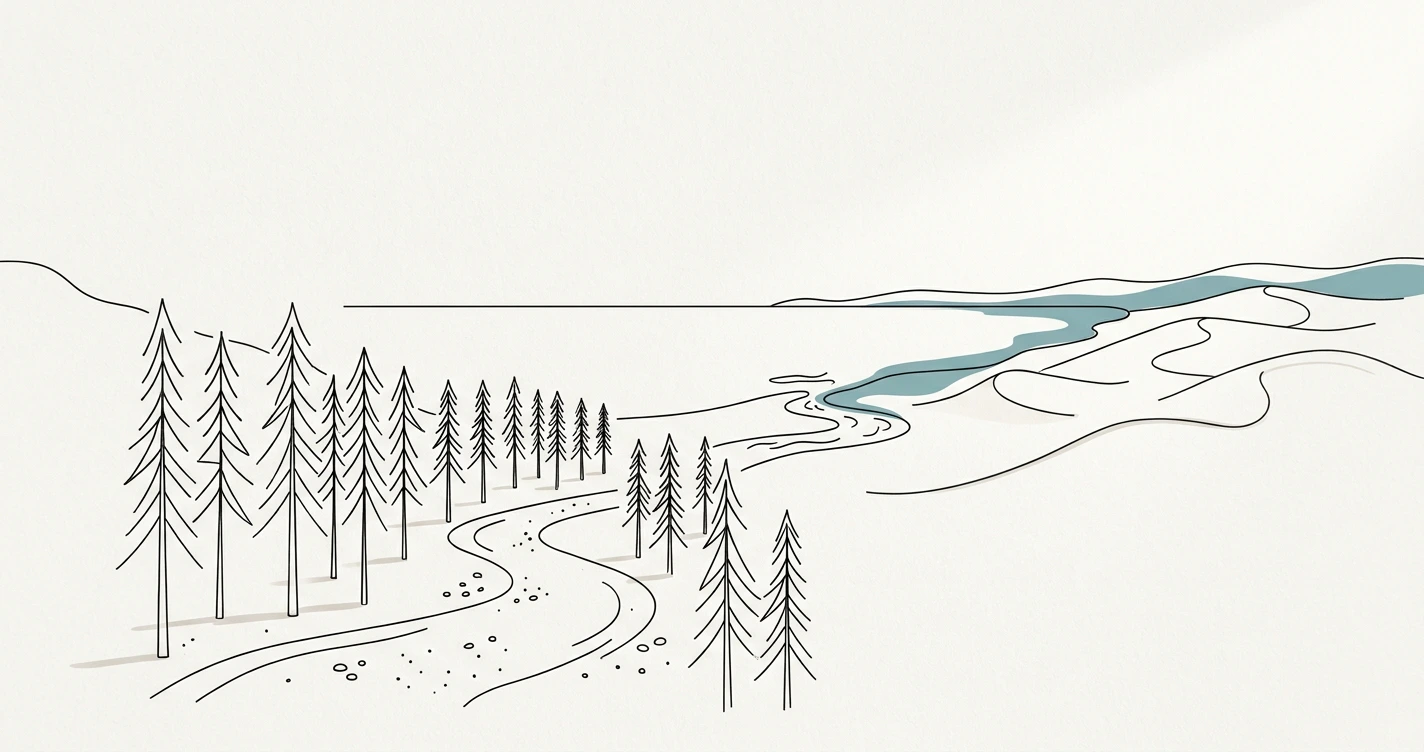
The mouth of the River Segura offers several flat, accessible walking routes linking the river, the century-old pine forest and the beach in just a few kilometres. Walking in Guardamar is centred here because the terrain is easy, the routes are well signposted and a single walk takes in three landscapes: the riverside, pine forest growing on dunes and the Mediterranean coast.
This guide describes the main routes, the natural highlights and birds in the area, the difficulty and duration of each route, what to bring, and how to get there and park without disturbing a protected area. It is intended for residents of the Vega Baja and visitors to the Costa Blanca planning a day out.
Why walk around the mouth of the River Segura?
The River Segura runs for 325 kilometres from the Sierra de Segura in Jaén before flowing into the Mediterranean at Guardamar del Segura (Segura River Basin Authority). Its final stretch, where fresh water meets the sea, brings together a wide variety of habitats in a small area.
The appeal of walking in Guardamar lies in this mix. In a single outing, you can go from the wooded riverbank to dunes stabilised by pine trees and, a few minutes later, to the seashore. There is virtually no change in elevation, and most sections have a firm surface or wooden boardwalks.
For those looking for more outdoor activities in the area, the municipality also has beaches, cycle lanes and trails of varying difficulty, offering options beyond the river itself.
Which routes follow the river to the sea?
The main route follows the bank of the Segura from the town centre to the river mouth. It is a flat walk of around 3 kilometres each way and takes just over an hour to reach the sea. It is the backbone of the other routes in the area.
The classic route starts near the bridge over the river, beside the marina. From there, a paved promenade follows the river. As the river widens, reed beds and the first waterbirds come into view, until you reach the point where the Segura flows into the Mediterranean, between La Roqueta beach and the breakwater.
Linking up with the pine forest and dunes
From the river mouth, you can join the pine-forest trails without walking on tarmac. Wooden boardwalks cross the dune ridge and lead to Vivers and Babilònia beaches. This section adds between 2 and 4 kilometres, depending on the loop you choose, all on flat ground.
Guardamar’s pine forest is not a natural woodland. It covers around 800 hectares and includes nearly 600,000 trees planted between 1900 and 1930 to stop the dunes advancing on the town (Ecoticias). Before the planting began, the dunes could move forward by several metres a year.
Short circular route
For a shorter outing, there is a loop of around 5 kilometres linking the river, a section of pine forest and the return along the beach. It is recommended for families with young children or anyone with only a morning to spare. In the hotter months, it is best to set off early.
Anyone wanting to understand how this landscape came about can read about the history of Guardamar’s century-old dune pine forest, one of the great feats of forestry engineering on the Spanish coast. It was a direct response to the advancing sand that threatened people’s homes.
What natural highlights can you see along the way?
The area’s main feature is the contrast between the dune ecosystem, pine forest and river wetland. Guardamar’s dune ridge is designated a Site of Community Importance, with a protected core area of 19.78 hectares and 63 documented vascular plant species (Generalitat Valenciana).
There are several highlights along the route. The first is the river mouth itself, where fresh and salt water mix, attracting fish and birds. The second is the shifting dunes, with plants adapted to sandy conditions, such as the sea daffodil. The third is the mature pine forest, which provides shade and shelter for numerous species.
The riverbank and reed beds
In the final stretch of the river, before it reaches the sea, reeds and rushes form a small wetland. This is the quietest part of the route and the best place to stop and observe. It is worth walking slowly and quietly here.
The castle and old town
If you extend your walk inland towards the town, you will reach the castle hill, which has views across the whole river mouth. Combining nature and heritage in a single day, with the beaches, dunes and castle, is one of the municipality’s strong points.
Which birds can you see in the area?
The river mouth and nearby wetlands are a stopping point for many waterbirds. At nearby El Hondo, one of the major wetlands in the south of Alicante, more than 170 bird species have been recorded, with winter concentrations of over 30,000 waterbirds (Esto es Elche).
In the river’s final stretch and among the reed beds, it is common to see little egrets, black-winged stilts and avocets feeding along the banks. There are more diving ducks in winter and, if you are lucky, you may spot a bird of prey circling above the wetland, such as a western marsh harrier.
Notable species in the area
The Vega Baja is home to threatened birds of great importance. These include the marbled teal, white-headed duck and western swamphen, three waterbird species for which the south of Alicante has become one of their last refuges in Europe.
When to watch birds
The best times are dawn and dusk, when birds are most active and the light is good for watching them. The variety is greatest in spring and autumn, during migration. A lightweight pair of binoculars can greatly improve the experience without adding much weight.
How difficult are the routes, and how long and far are they?
The routes around the mouth of the River Segura are easy, covering between 3 and 8 kilometres and taking one to three hours, depending on the route. The terrain is flat throughout, with no significant climbs, making them suitable for almost anyone.
Here is a summary of the three main options to help you choose according to the time you have and who is coming with you.
River route (there and back)
Follow the bank of the Segura from the bridge to the river mouth, then return the same way. The total distance is around 6 kilometres and it takes an hour and a half at a relaxed pace. It is the easiest route and the best signposted.
Circular river, pine forest and beach route
This route combines the riverside section with a stretch through the pine forest and a return along the coast. It is around 5 kilometres and takes an hour and a quarter. It adds shade and variety to the scenery, making it ideal for children.
Long dune route
This route links the river mouth with Vivers and Babilònia beaches via the dune boardwalks. It covers 8 kilometres and takes around three hours with stops. It is the most comprehensive option for observing plants and birds.
It is worth checking the day’s forecast before setting off. Looking at Guardamar’s weekly weather forecast can help you choose when to leave and avoid strong easterly winds, which blow sand around at the river mouth.
What should you bring for the walk?
The basic kit for these routes is light: comfortable footwear, enough water, sun protection and a hat. These are short, flat routes, so you do not need mountain-walking equipment, but the sun and coastal wind call for a few precautions.
For a half-day outing, it is worth bringing the following:
Trainers or lightweight walking shoes. The surface is firm, although some sections are sandy.
Water: at least one litre per person in summer. There are no drinking-water fountains along the whole route.
Sun protection, a hat and sunglasses. The pine forest provides only partial shade, and the beach is exposed.
Binoculars, if you want to watch birds comfortably.
A bag to take your rubbish home. Leave no waste in a protected area.
In the hottest months, the key is to start early. In summer, walking between 8am and 11am helps you avoid the hottest part of the day and enjoy the area when the birds are most active. In winter, by contrast, the middle of the day is pleasant thanks to the Costa Blanca’s mild temperatures.
How does the time of year affect the walk?
The best seasons for walking in Guardamar are autumn and spring, when temperatures are mild and migrating birds fill the wetlands. In summer, it is best to start early to avoid the heat, while winter brings sunny days and fewer people.
Each season changes the experience. In spring, dune vegetation flowers and birdwatching is at its best. In summer, the area is shared with beachgoers, so the early hours are the quietest. In autumn, visitor numbers fall and the light is excellent for photography.
Winters on the Alicante coast are usually mild, with clear days that are ideal for walking. November, for example, has mild temperatures and is still a good month for these routes, provided you keep an eye on the westerly wind.
How can you get there and park without disturbing the surroundings?
Guardamar del Segura can be reached via the N-332 road and the AP-7 motorway, which has a direct exit for the municipality. From the town centre, signs to the marina and beach take you to the start of the routes in just a few minutes, whether by car or on foot.
Park in the designated areas beside the beach and pine forest. In the low season, spaces are easy to find; in summer, it is best to arrive early. The essential rule is not to park on dune vegetation or create new paths through the dunes, as they are part of a protected area.
Getting there by public transport or on foot
The river mouth is a 15- to 20-minute walk from the town centre, so many residents prefer to walk and avoid parking. This reduces pressure on the surroundings and is the best option on summer weekends.
Respecting the protected area
In the pine forest and dunes, stick to the marked paths and boardwalks. Walking off them damages vegetation that took decades to stabilise the sand. Dogs must be kept on a lead, and fires and camping are not allowed.
If you are travelling a long way, it is worth checking the condition of the local road network before setting off, as closures and roadworks in the Vega Baja can affect access and add to your journey time.
What facilities are near the routes?
During the season, the area around the river mouth has beach bars, toilets and rest areas, as well as places to eat in the town centre just a few minutes away. This makes it possible to plan a full day without having to travel far.
After the walk, local food makes a good end to the day. Guardamar is known for its seafood, with rice dishes and caldero, a local fish and rice dish, among the traditional options at restaurants in the town centre.
The municipality also has an open-air weekly market for anyone wanting to pick up a few things before or after the walk. It is a handy way to combine a walk with shopping in the same morning, with fresh produce from the area.
What precautions should you take around the river mouth?
The point where the river reaches the sea calls for caution. The Segura’s current and the tides create areas of unstable water near the breakwater, so it is not a recommended place to swim, despite its calm appearance. Walkers should stick to firm ground along the shore and avoid going into the water.
There are a few other minor risks worth bearing in mind. On days with strong easterly winds, airborne sand can reduce visibility and make the beach uncomfortable. After heavy rain upstream, the river’s flow increases and some low-lying parts of the riverbank may become waterlogged. In either case, it is better to put off the walk or shorten it.
Leave wildlife and plants undisturbed
Dune vegetation is fragile and protected. Picking plants such as the sea daffodil or walking off the boardwalks damages the work that keeps the sand in place. Keep your distance from birds: approaching nests or shouting can frighten more sensitive species, several of which are threatened.
Leave no rubbish
Leave no waste of any kind in a protected area, including food scraps. Take everything you bring back with you. Cigarette ends and plastic are particularly harmful in the dunes and in the water. Carrying a small bag makes it easy to take your rubbish away.
How can you combine the walk with other things to do in Guardamar?
The river mouth fits well into a full day combining nature, the beach and the town. The walk takes up a morning, leaving the afternoon free to explore the historic centre and castle or relax on the beach, all just a few minutes’ walk from the end of the route.
A popular choice among residents is to combine the riverside walk with a stretch of the southern beaches, such as Vivers or Babilònia, which continue the coastline towards Torrevieja. Backed by the pine forest, these beaches offer shade and beach bars in season, making them a good place for a long break halfway along the route.
Photography and the best viewpoints
The area is very photogenic. The best light is at dawn, when the sun rises over the sea, and at sunset, when the pine forest and dunes take on warm colours. The river-mouth breakwater and the top of the pine forest offer the best overall views of the river and coast.
A family outing or in g
This is an automatic translation of an article originally published in Spanish by La Gaceta de Guardamar. If in doubt, the Spanish version prevails. Read the original · More news in English