Is being Spanish enough to decide Spain’s future?
A poll suggests that around 70% of the Spaniards consulted oppose allowing people who acquired Spanish nationality through descent, but have never lived in Spain, to vote in elections. The result raises questions about the relationship between citizenship, residence and electoral participation.
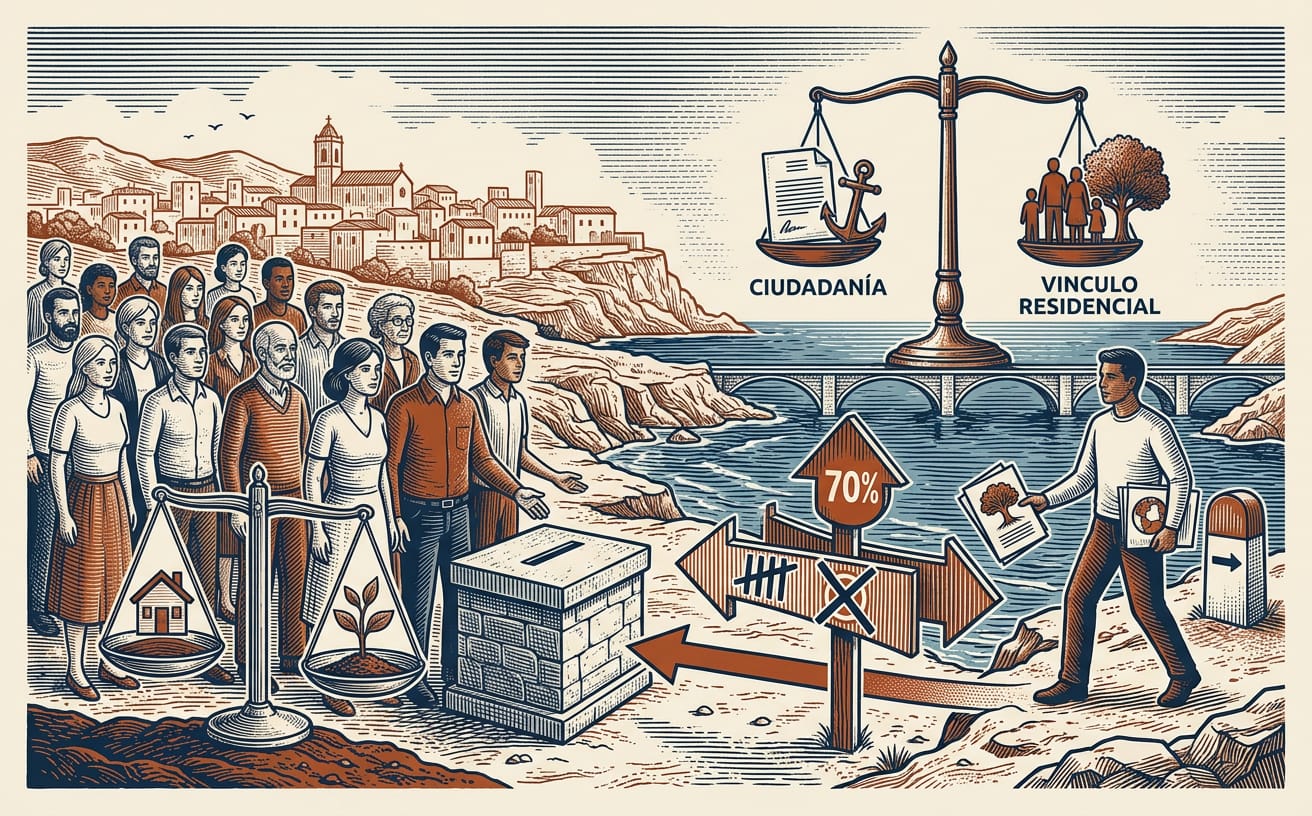
The other day I read a story that got me thinking. According to a poll, around 70% of the Spaniards consulted disagree with allowing people who acquired Spanish nationality because they are descended from Spaniards, but have never lived here, to vote in our elections.
And the truth is, there is more to this issue than meets the eye.
For many years, Spain was a country of emigrants. Our grandparents, great-grandparents and many other relatives had to leave to seek a better life. Some left out of necessity, others because of political circumstances, but almost all left behind a homeland they must have missed terribly.
It is natural that their children and grandchildren have grown up feeling a special connection to Spain. They have listened to family stories, kept traditions alive, or even felt Spanish without ever having set foot here.
And that, of course, should not be dismissed.
But then there are those of us who live here. Those who get up every morning, go to work, take our children to school, pay taxes and see how our politicians’ decisions affect our daily lives.
And that is where the question arises.
Does it make sense for someone who has never lived in Spain to have the same right to decide its future as someone who has spent their whole life here?
I am not saying the answer is simple. In fact, I do not think it is.
There are also Spaniards who live abroad, still have family here, own a home or even plan to return one day. And living abroad does not make them any less Spanish, of course.
Besides, the right to vote does not depend on how much tax we pay or how many years we have lived somewhere. It depends on our citizenship, and that is important to remember too.
But I think it is only natural that many people ask these questions. They do not necessarily come from bad intentions.
Recognising that someone has Spanish roots—which seems perfectly understandable to me—is one thing; opening up a debate about how our electoral system should work is another.
They are two different things, even though we often mix them up.
Sometimes I feel we have got used to every debate turning into an argument between opposing sides. If you ask a question, it seems you have to pick a camp. It should not be like that.
We can acknowledge our history, respect those who had to leave and their descendants, and at the same time talk calmly about the rules by which we choose our representatives.
Because, ultimately, we are talking about something as important as deciding who governs our country.
Perhaps we will not find an answer everyone agrees with. We probably will not. But we should be able to discuss it without getting angry, without labelling one another and, above all, while listening to people who think differently.
This story has left me with a question on my mind.
Is being Spanish a matter of origin, of feeling, of living here… or a mixture of all three?
I do not know whether there is a perfect answer. But I certainly think it is worth talking about.
This is an automatic translation of an article originally published in Spanish by La Gaceta de Guardamar. If in doubt, the Spanish version prevails. Read the original · More news in English