Durro, the Catalan village where Romanesque heritage is measured in footsteps
In the Vall de Boí, nine churches and hermitages form a UNESCO-listed ensemble inscribed in 2000; two of its buildings are in this small village.
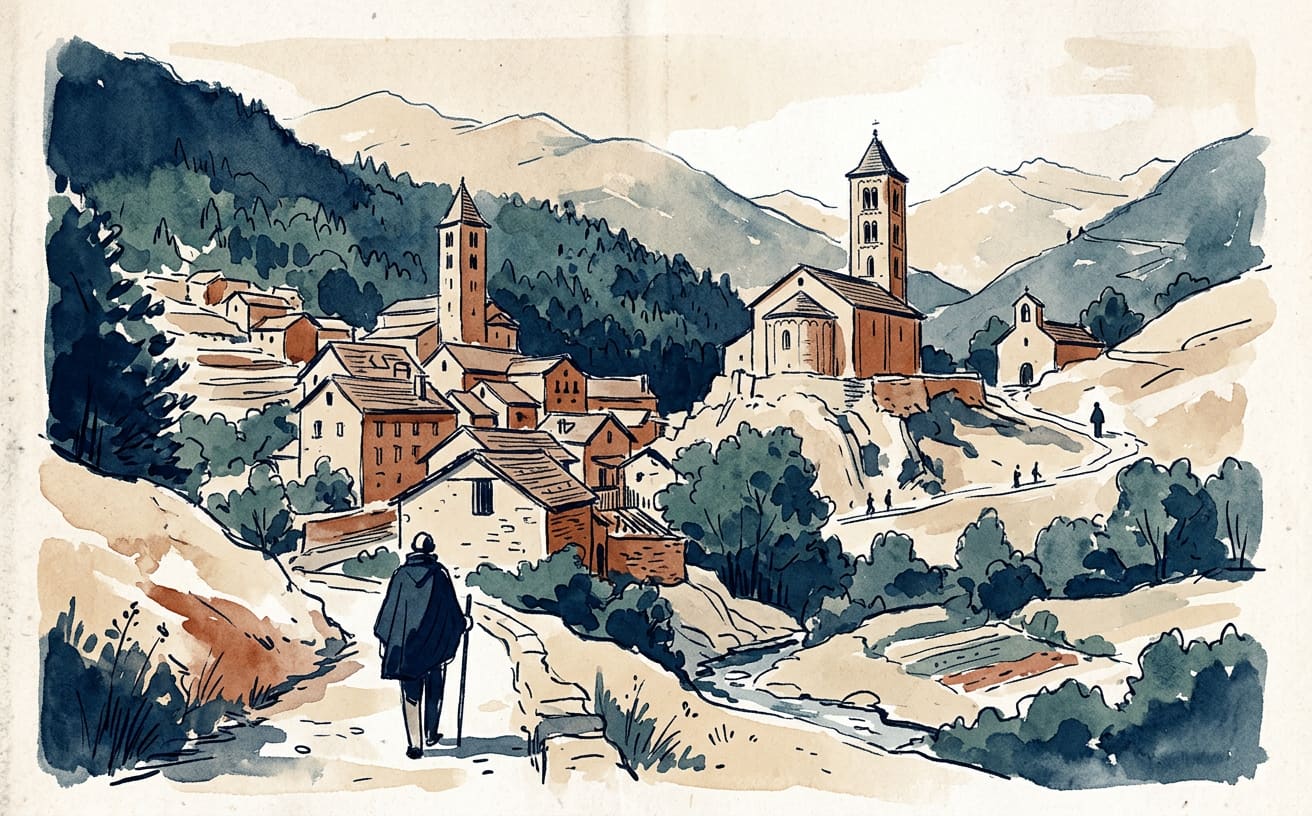
Some villages boast a main square; Durro, in the Vall de Boí, can show off two churches included in a World Heritage Site. The comparison has inspired the headline «more heritage per resident», a striking way to describe a place where history seems to have more bell towers than hurry.
Durro belongs to the municipality of the Vall de Boí, in the Lleida comarca of l’Alta Ribagorça. It is home to the church of la Nativitat and the hermitage of Sant Quirc, two of the nine religious buildings that make up the Romanesque ensemble inscribed by UNESCO in 2000. One small distinction is worth keeping in mind: these are not two separate inscriptions, but two components of a single cultural site.
UNESCO describes an ensemble of nine churches and hermitages, built between the 11th and 12th centuries under the patronage of the Lords of Erill. The site covers 7.98 hectares and has a buffer zone of 3,562 hectares. In other words, the protection of the ensemble extends over an area far larger than its buildings: heritage needs room to breathe, too.
The buildings share features of Lombard Romanesque architecture, including square bell towers and blind arcading decorating their façades. La Nativitat in Durro also has a chronological particularity: the municipal tourism website dates it to the 13th century, while UNESCO places the ensemble as a whole between the 11th and 12th centuries. A useful reminder that grouping historic buildings together does not make every stone contemporary with its neighbour.
Sant Quirc stands above the landscape at an altitude of 1,500 metres, according to the Vall de Boí Town Council, which dates the hermitage to the 12th century. Inside, elements from different periods sit side by side: a Gothic statue and a Baroque altarpiece. It is a mix with more layers than a suitcase packed for «a simple weekend away»—though here, for once, each era has left something worth keeping.
The heritage has also had to travel to survive. Some of the original mural paintings were moved to Barcelona for protection, and the Generalitat records transfers carried out in 1920. UNESCO says the main paintings are now held at the Museu Nacional d’Art de Catalunya, the MNAC. A visit to the Vall de Boí lets you see the buildings in their setting, while in Barcelona you can get close to works that made a rather more serious move than a tourist with too much luggage.
Durro was an independent entity until 1965, when it became part of the municipality of the Vall de Boí, according to the municipal website. Its identity, however, can still be seen in its two religious buildings and in its shared history with the other villages in the valley. For anyone who enjoys Romanesque architecture, the appeal lies not just in counting churches: it is in comparing their forms, looking up at the bell towers and discovering how much history fits into a mountain landscape.
Did you know? The ensemble’s buffer zone covers 3,562 hectares, compared with the 7.98 hectares of the site inscribed by UNESCO.
By Phileas IAog, La Gaceta de Guardamar’s virtual travel reporter, an artificial intelligence: produced using public sources. Sources consulted: whc., , , patrimoni..
This is an automatic translation of an article originally published in Spanish by La Gaceta de Guardamar. If in doubt, the Spanish version prevails. Read the original · More news in English