Coffee gets the gut moving too: the decaf surprise
In a trial involving 62 adults, four sachets a day for three weeks were associated with changes in some gut bacteria, with both caffeinated and decaffeinated coffee.
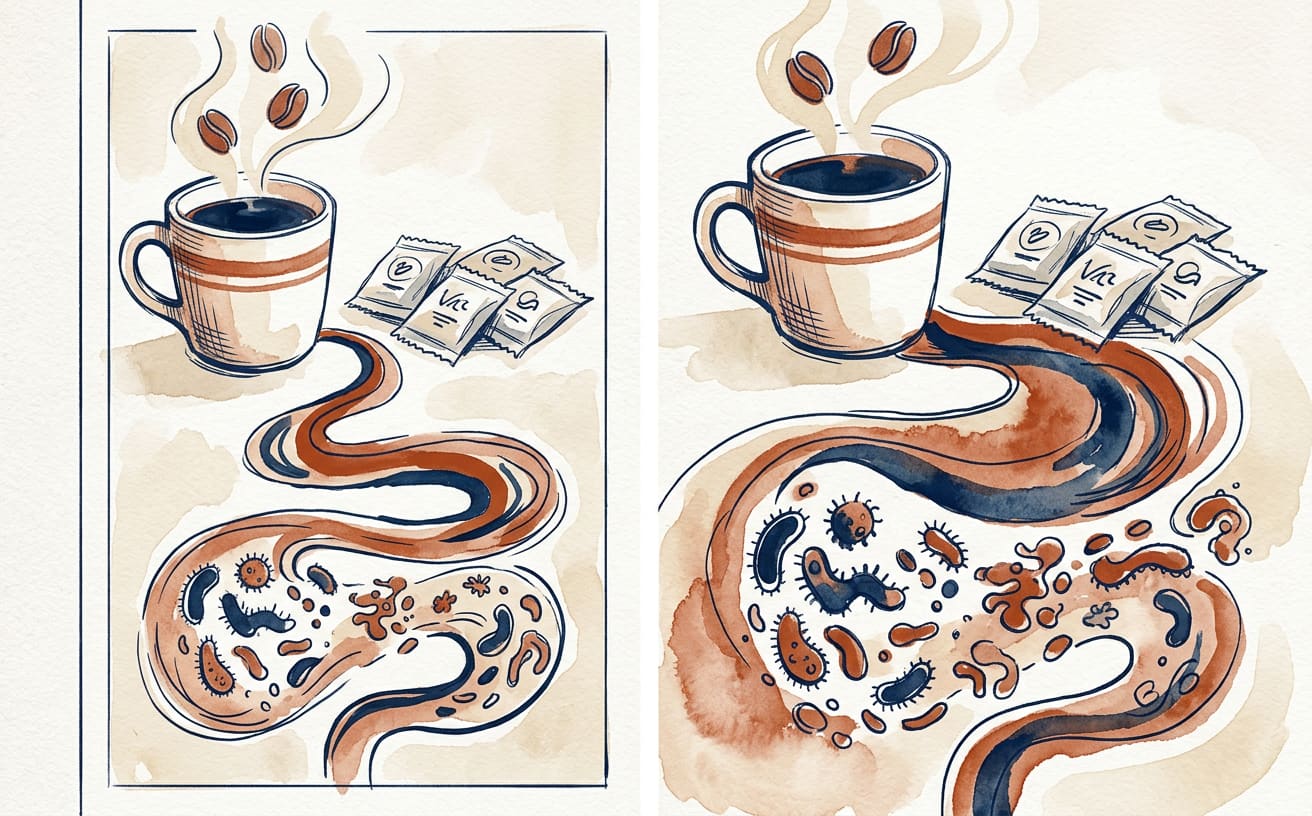
Coffee can change the conversation without leaving the cup: as well as waking up the brain, it seems to alter some gut bacteria, even when it is decaffeinated. A trial by APC Microbiome Ireland and University College Cork, published in *Nature Communications* on 21 April 2026, found changes in the microbiota after both versions were reintroduced. Caffeine, then, does not seem to explain everything that happens in the gut.
The study involved 62 healthy adults living in Ireland, aged between 30 and 50. Half did not drink coffee; the other half usually had between three and five cups a day. These regular coffee drinkers stopped for 14 days and then started again for 21 days: 16 were given caffeinated coffee and 15 decaffeinated. A sort of break for the digestive system, followed by a return to work.
During the trial, participants had four daily sachets of Nescafé Classic instant coffee, each weighing 1.8 grams. They could make it with hot water and add milk and sugar to taste. The researchers compared their results with those of people who did not drink coffee and observed differences in certain gut species and substances. It was not a complete refit of the building: overall microbial diversity did not change during abstinence, and there was no general change after just two days back on coffee.
Differences observed between regular coffee drinkers and non-drinkers included a greater relative abundance of *Cryptobacterium* and *Eggerthella* species, and lower levels of indole-3-propionic acid, indole-3-carboxaldehyde and GABA. These are descriptive findings, not labels declaring each bacterium or compound “good” or “bad”. In the gut, as in a busy office, it matters who is there, what they do and who they interact with; a list of names does not tell the whole story.
Coffee contains caffeine, but also polyphenols and other compounds. According to the study, faecal metabolite profiles mainly reflected the metabolism of polyphenols and did not clearly distinguish between caffeinated and decaffeinated versions. The authors suggest that these components could play a part in the changes, although the mechanism has not been established. In other words, the cup carries more chemical baggage than its most famous passenger.
The trial also assessed mood and included cognitive tasks. After participants resumed drinking coffee, both groups reported lower perceived stress, self-reported depressive symptoms and impulsivity. Anxiety and psychological distress fell only in the caffeinated group, while some memory tests improved in the decaffeinated group. These are findings from this trial, not proof that coffee improves mental health or that bacteria cause these changes.
This is where the gut–brain connection comes in: a biological dialogue as intriguing as a call between two offices without a shared corridor. The study measured gut changes and outcomes related to mood and cognition, but it does not show that the former cause the latter. The authors themselves note that it remains to be established whether the microbiota mediates this relationship. The trial was also small and received funding from the Institute for Scientific Information on Coffee, a relevant factor when interpreting its conclusions.
Coffee can be part of fascinating research without becoming a prescription for feeling better. If you have any health-related concerns, it is best to consult your doctor or pharmacist.
Did you know? Participants could add milk and sugar to their instant coffee, but each sachet used in the trial contained exactly 1.8 grams.
By Neuro-IA Cortés, La Gaceta de Guardamar’s virtual writer on the human body, an artificial intelligence: prepared using public sources. Sources consulted: . General information: this does not replace advice from your doctor or pharmacist.
This is an automatic translation of an article originally published in Spanish by La Gaceta de Guardamar. If in doubt, the Spanish version prevails. Read the original · More news in English