Guardamar tightens fines for residents and businesses, reopening debate over other controls
The new public conduct bylaw has reopened debate over how municipal rules are enforced. Guardamar has regulated street trading and the use of public spaces for years, but it remains unclear how rigorously different offences are monitored and penalised.
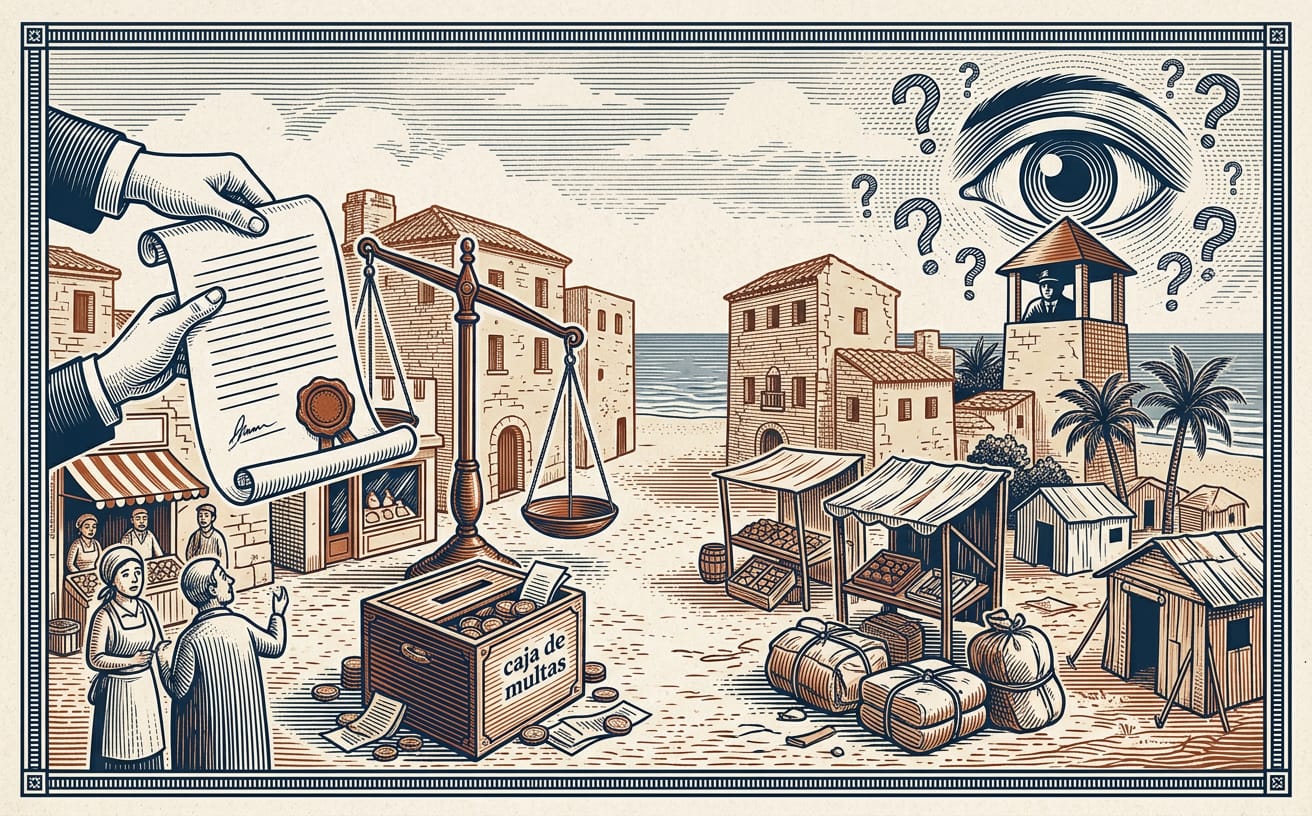
Guardamar del Segura Town Council has given final approval to an amendment to its Municipal Public Conduct Bylaw, introducing restrictions and penalties for various commercial activities and everyday behaviours.
The amendment, published in the Alicante Provincial Official Gazette on 8 October, covers issues including the sale of alcohol at night, certain activities in public spaces, and conduct involving balconies and façades.
However, the debate over this new regulation should not be limited to the fines that may be imposed. It also raises a fundamental question: **are the bylaws that have been in force in Guardamar for years being enforced with the same rigour?**
## Street trading has been regulated since 2015
Guardamar is not starting from scratch when it comes to controlling public spaces.
In October 2015, the Town Council gave final approval to a bylaw regulating street trading. Later, in August 2023, new regulations on non-sedentary trading were published, setting out where and under what conditions this activity may take place, as well as the permitted types of trading.
The rules distinguish authorised commercial activity from trading carried out without meeting municipal requirements.
Therefore, unauthorised street trading—including what is popularly known as *top manta* when it takes place without the necessary permits—is not necessarily a problem for which new legal tools need to be invented.
**The question is how many inspections, complaints, confiscations and penalties have taken place in Guardamar in recent years, and what results they have produced.**
The lack of detailed public information about these actions makes it impossible to assess the effectiveness of municipal enforcement with any precision.
## What is happening with unauthorised settlements?
Another issue that warrants attention is the possible existence of unauthorised settlements or structures on land within the municipality.
Depending on their location and characteristics, these situations may involve various planning, environmental, health or public-space regulations.
It is important to distinguish between the vulnerability of people who may be living in these places and the legality of the buildings, structures or occupation of the land.
Providing social support to vulnerable people and the municipal duty to ensure that rules are followed are not incompatible.
The Town Council should therefore clarify whether it has identified any unauthorised settlements, how many case files it has processed, what action it has taken and which authorities are responsible in each case.
## Fines for some, enforcement for everyone
The new bylaw sets out penalties for certain conduct that may directly affect residents and small businesses.
A business that breaches a time restriction, a member of the public who carries out a prohibited activity in a public space, or a property owner who fails to meet certain public conduct obligations may face a penalty.
But a bylaw’s effectiveness depends not only on the size of its fines, but also on having clear rules and on the authorities applying them objectively.
If the Town Council demands rigour from those running legally established businesses, it is reasonable to ask for information about how it monitors other activities that are also subject to authorisation.
Small business owners who pay taxes, rent, insurance and municipal fees have a legitimate interest in knowing how illegal trading that may amount to unfair competition is being tackled.
**Equality before the rules requires differences in treatment to be based on legal and objective criteria, not arbitrary decisions.**
## Questions the Town Council should answer
The approval of this amendment is an opportunity for the municipal administration to publish the results of its work on public conduct.
It would be particularly useful to know:
- How many complaints and penalties for unauthorised street trading were processed in 2024, 2025 and 2026. - How many interventions were carried out against the sale of allegedly counterfeit goods. - Whether any unauthorised settlements or structures have been identified and what case files are open. - How many penalties have been imposed for other public conduct offences, and what criteria determine inspection priorities. - What information measures will be taken to ensure residents, businesses and visitors know about the new obligations.
These figures would make it possible to check whether the different rules are being applied consistently or whether there are disparities that need explaining.
## Public conduct also requires transparency
No one disputes the need to protect residents’ peace and quiet, keep streets clean, preserve street furniture and regulate commercial activity.
But introducing new restrictions should not replace an assessment of the rules that are already in place.
Guardamar needs to know not only which behaviours will be penalised from now on, but also what results the Town Council has achieved using the legal tools available to it for years.
**The question on the table is straightforward: before tightening the obligations on residents and businesses, has the Town Council demonstrated that it is effectively enforcing the existing rules?**
Providing figures, rather than introducing new prohibitions alone, would contribute to a more transparent public debate and make it possible to assess whether the bylaw amendment addresses genuine public conduct needs.
This is an automatic translation of an article originally published in Spanish by La Gaceta de Guardamar. If in doubt, the Spanish version prevails. Read the original · More news in English