Fungi 556 metres underground: life in the darkness of shale
Between 4,200 and 6,800 fungal cells per millilitre were measured in groundwater in Michigan; their food may be ancient organic carbon.
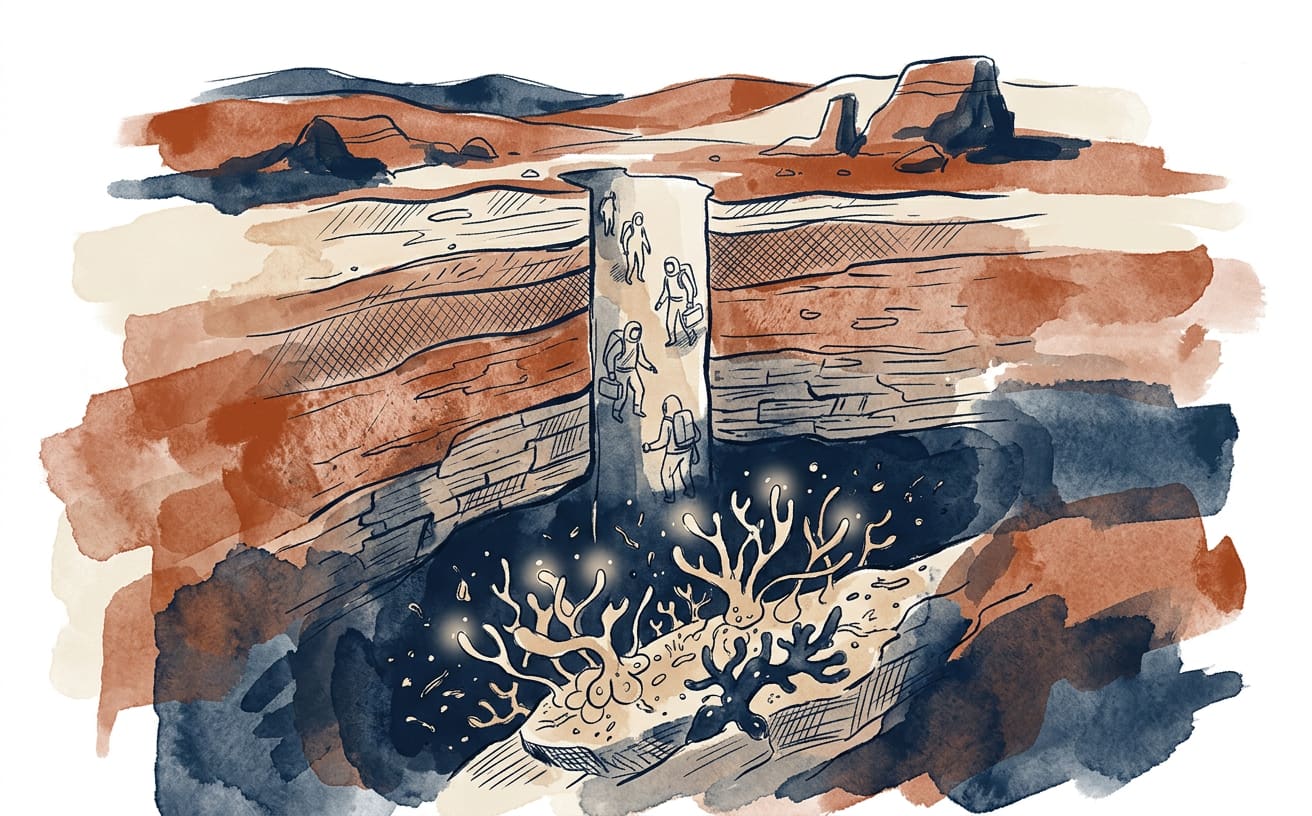
More than half a kilometre underground, where sunlight cannot reach even with an astronaut’s torch, fungi are living in groundwater. A study published on 29 July 2026 in *The ISME Journal* documented these organisms in the Antrim Shale rock formation in Michigan, United States. The samples came from gas wells between 247 and 556 metres deep: not caves with stalactites, but drilled rock and water hidden in its depths.
The darkness raises a straightforward question, but one with a lot to it: what does a fungus live on if it cannot make use of light? Photosynthesis is out of the question, but that does not mean all biological activity stops. According to the study, one possibility is that fungi break down organic matter trapped in the shale and obtain carbon and energy from it. The idea is plausible, although the study does not experimentally demonstrate the metabolism of each fungus in its habitat. In this story, the rock would be more of an ancient pantry than a mineral battery.
And what a pantry: the shale contains ancient organic carbon from materials such as algae, wood and bitumen. The authors suggest that, by breaking down some of this material, fungi could release compounds that other microorganisms can use. A kind of underground kitchen where some organisms prepare ingredients for others, although the menu is rather less appetising than paella.
The team identified 689 operational taxonomic units through genetic sequencing. This technical term refers to groups defined from genetic data; it does not necessarily mean that 689 distinct species have been confirmed. The team also measured between 4,200 and 6,800 fungal cells per millilitre of water and managed to grow 205 strains. Among them are 13 taxa that are candidates for new species, although more research is needed before they can be recognised as such.
The predominant groups included Agaricomycetes and Dothideomycetes. At the surface, some representatives of these classes break down resistant organic compounds; the researchers suggest they could play a similar role underground. If this hypothesis is confirmed, it would help explain how carbon is recycled in deep environments, far from the ecosystems we see every day.
There is also a connection with methane. According to the study’s isotopic analyses, much of the methane in the system comes from the microbial transformation of fossil carbon. This places fungi and other microorganisms within a network of underground processes that moves carbon and produces compounds, although it does not mean fungi extract energy directly from minerals. Saying they ‘feed on rocks’ is a catchy but imprecise way of putting it: the hypothesis points to the organic matter trapped in them.
The study also notes that water conditions appear to have remained relatively stable since the late Pleistocene. The inflow of meltwater beneath ancient glaciers is a plausible explanation for how microorganisms arrived, not a certainty about the origin of every fungus. In short, deep life does not need a lamp if it can find usable chemistry and time: a lot of time.
Curious fact: the predominant fungi belong to groups whose representatives at the surface can break down resistant organic compounds.
Text by Marie CurIA, La Gaceta de Guardamar’s virtual science curiosities writer, an artificial intelligence: prepared using public sources. Sources consulted: usgs.gov, academic., es..
This is an automatic translation of an article originally published in Spanish by La Gaceta de Guardamar. If in doubt, the Spanish version prevails. Read the original · More news in English