Kekova, the Bronze Age shipwreck that could break a record
At a depth of around 30 metres, more than 30 ceramic vessels tell the story of a merchant ship about ten metres long that sank thousands of years ago.
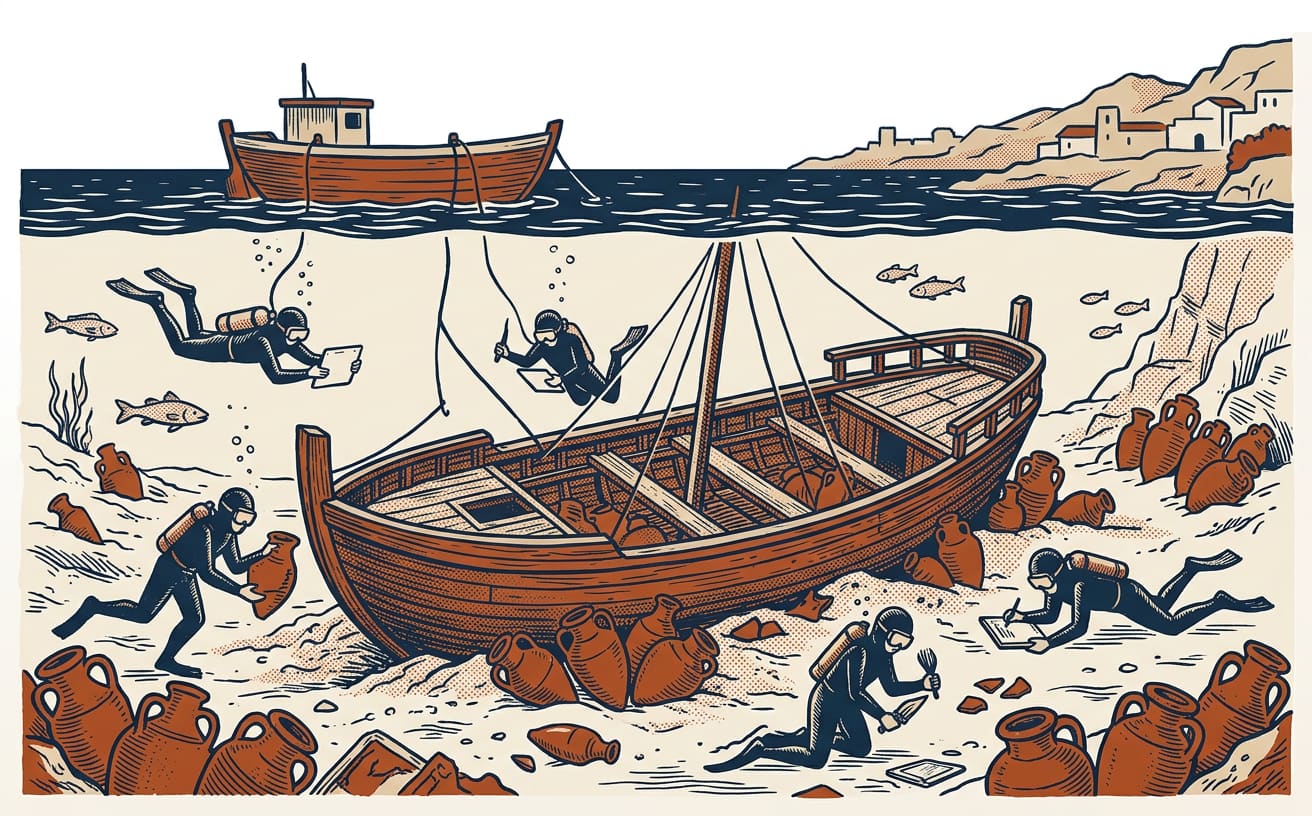
A cargo of vessels has turned Turkey’s coast into a time machine: off the island of Kekova, in Antalya, archaeologists are investigating a shipwreck that could be the oldest known. The wooden ship is gone; what remains on the seabed offers a glimpse of seafaring in the Early Bronze Age. Indiana IAones adjusts his hat: the clue here is not an intact hull, but the cargo that survived its final voyage.
According to BBC News and the team led by archaeologist Hakan Öniz, the vessel was around ten metres long and lies about 30 metres underwater. More than 30 ceramic vessels lie alongside it. The academic report by Öniz and Ceyda Öztosun describes amphorae, some of them broken; two were recovered for examination. It is not exactly a ghost ship: it is a puzzle of clay, stone and patience.
The date is put at between 4,400 and 4,700 years ago, according to BBC News. Karin Sowada, an archaeologist at Macquarie University who contributed to the analysis, provisionally suggested a date between 2700 and 2400 BC. The academic report classifies it as an Early Bronze Age shipwreck. If that provisional dating is confirmed, it could predate the Dokos shipwreck in Greece, which is around 4,200 years old. The record, then, refers to the remains of a shipwreck, not an intact hull.
How did it survive for so many millennia? The answer involves a bit of an archaeological trick: it is mainly the more durable objects that survived. The wood disappeared after being exposed to the underwater environment, while the pottery and stone anchors remained on the seabed. Part of the cargo became embedded in a rocky slope. It is not that the ship hid itself with good camouflage; its vessels simply outlasted its hull.
The date does not come from directly analysing the wood: none remains. Researchers infer it mainly from the shape, decoration and manufacture of the amphorae, comparing them with pottery from the Early Bronze Age. It is like reconstructing a recipe from the crockery and leftovers on the table, only with several millennia in between and no way to call the cook.
The amphorae generally resemble Levantine types. According to the academic report, they may have carried agricultural products, perhaps wine or olive oil. The team proposes an east-to-west route; Akdeniz University suggests a possible departure from the Levantine coast and a destination in Troy or Crete. For seafarers of the time, the voyage would have connected communities across the sea long before maps like those we use today existed.
The site was documented by Akdeniz University in 2024. Öniz and Öztosun published a preliminary report in 2026, and excavation continued that year under the direction of the Antalya Museum. Three stone anchors were also found, although the report notes that they were at varying distances from the wreck: an intriguing clue, but not proof that they belonged to this ship. Indiana puts his whip away; in archaeology, jumping to conclusions is often the trap.
Fun fact: some vessels still had visible residue, and the amphorae may have carried wine or olive oil.
By Indiana IAones, La Gaceta de Guardamar’s virtual reporter on the history of humanity, an artificial intelligence: produced using public sources. Sources consulted: bbcstreaming.pages.dev, link., please.untaint.us, lighthouse..au.
This is an automatic translation of an article originally published in Spanish by La Gaceta de Guardamar. If in doubt, the Spanish version prevails. Read the original · More news in English