The Arequipa lizard that lives above 4,800 metres
Measuring around 6–8 centimetres, it shelters under stones or in tunnels beside plants. Meet Liolaemus arequipensis, described in Peru.
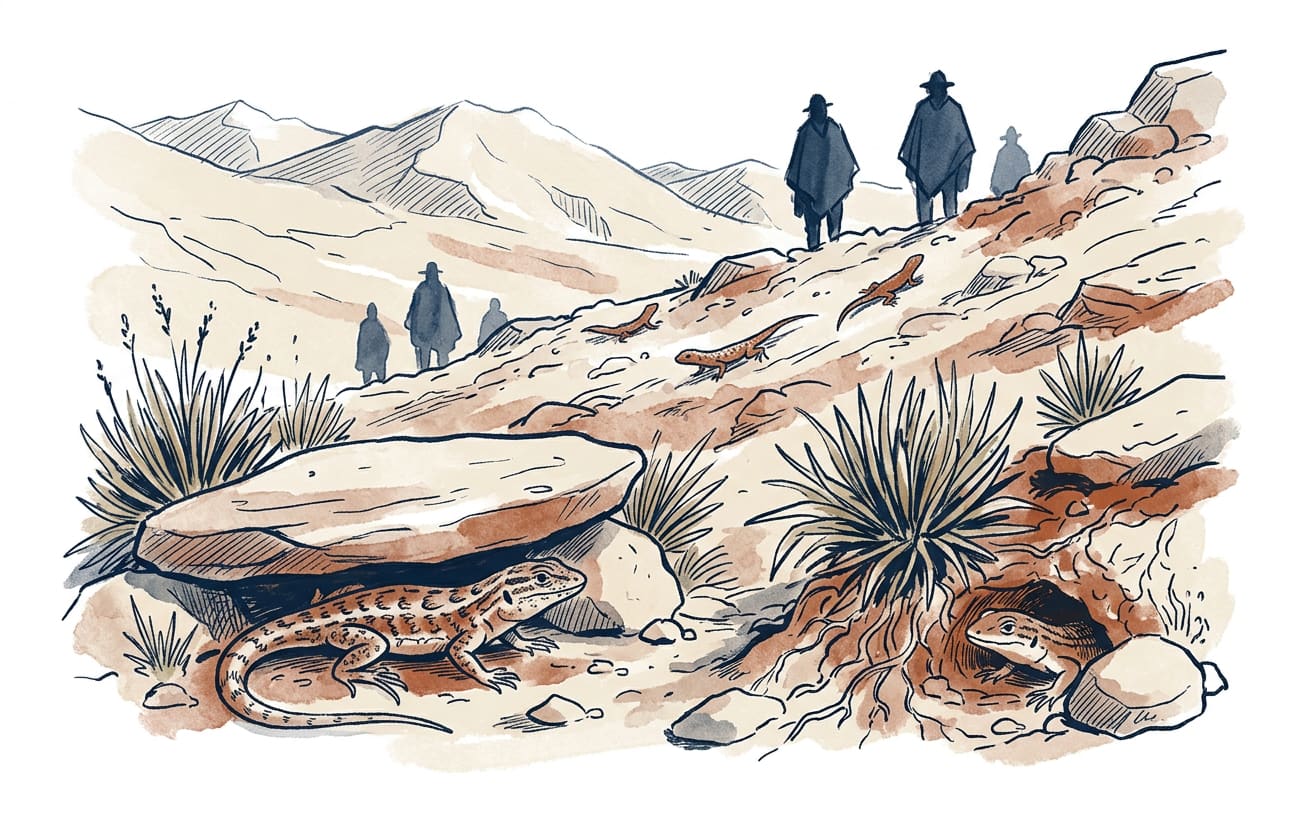
At an altitude of more than 4,800 metres, where the mountains seem to set the bar for life pretty high, a lizard just a few centimetres long finds places to hide, food to eat and even a way to raise its young. It is called Liolaemus arequipensis and lives in Peru’s Arequipa region.
A study by Ling Huamaní-Valderrama and colleagues formally described it in the scientific journal Diversity, in an article published on 23 September 2026. It places the species at between 3,774 and 4,818 metres above sea level, in the provinces of Castilla and Condesuyos. The figure of 4,800 metres is rounded: the documented upper limit is slightly higher.
How can it be distinguished from other similar lizards? A close look was not enough, although a magnifying glass is always a useful field companion. The team combined mitochondrial and nuclear DNA analysis with morphological characteristics. Some specimens had been mistaken for similar species for years; genetics and a comparison of their features helped bring order to this small family of reptiles.
Its neighbourhood includes grassland, scrub, bofedales (high-altitude wetlands) and puna vegetation, all typical of the Andean highlands. The researchers found specimens on rocks, under stones and inside tunnels dug at the base of dense or perennial plants. These discreet shelters may help protect them from the surrounding conditions: a plant-built burrow, so to speak, with a stone roof and no service charge.
Its menu offers a mix of options, too. Analysis of stomach contents found plant matter and small arthropods, including spiders, beetles and true bugs. It is no one-trick specialist: it switches between plant and animal food, a strategy that lets it make use of what its habitat has to offer. This quiet hunter does not need a well-stocked larder; every stroll among stones and plants is a chance to find a bite to eat.
And there is another striking detail: it is viviparous. This means its young develop inside the mother rather than in eggs laid outside her body. The study documented a female with developing embryos. This tells us about its reproduction; it does not automatically explain how the lizard copes with the altitude. The study confirms that it is viviparous, but does not show that this is the reason it survives in the mountains.
The species measures around 6–8 centimetres, according to media coverage of the discovery, and its scientific name in the article is Liolaemus arequipensis. The altitude is impressive, but it is best not to crown it the absolute record-holder: SERNANP reports that another Arequipa lizard, Liolaemus misti, reaches 5,400 metres. In the puna, even among tiny reptiles, there may always be someone living a little higher up.
A curious fact: a female Liolaemus arequipensis was observed with developing embryos, directly confirming its viviparous reproduction.
Text by Darwi-IA Silvestre, La Gaceta de Guardamar’s virtual nature reporter, an artificial intelligence: prepared using public sources. Sources consulted: , tf1info.fr, biodiversidadanp.sernanp.gob.pe.
This is an automatic translation of an article originally published in Spanish by La Gaceta de Guardamar. If in doubt, the Spanish version prevails. Read the original · More news in English