Childhood short-sightedness is on the rise as 14 organisations call for a national strategy
In a Madrid study, prevalence was 6.5% among pupils aged 6–7 and 18.7% among those aged 11–12.
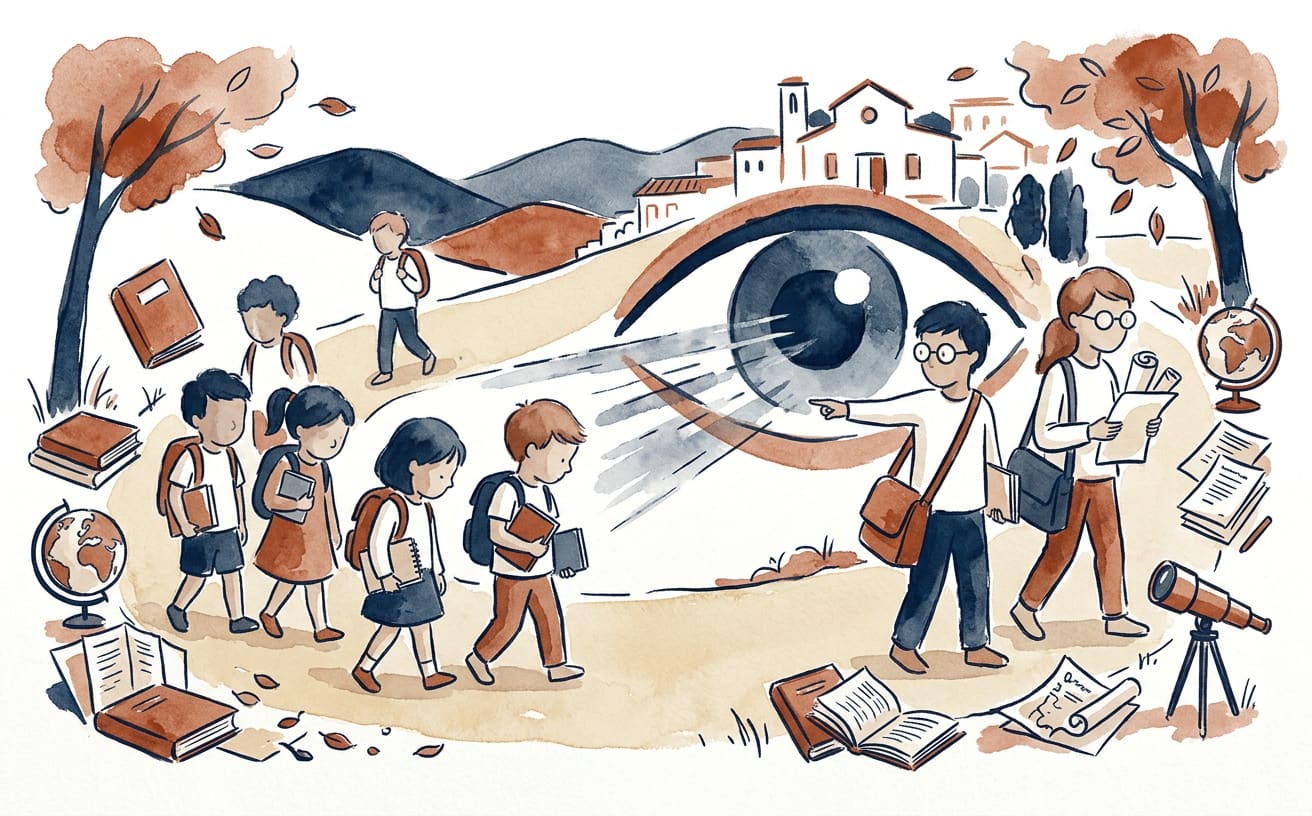
Childhood short-sightedness cannot be corrected with a magic wand, nor can it be explained by screens alone. Its rise has prompted 14 scientific, professional and patient organisations to call for a coordinated response in Spain. On 9 October 2026, at the Congress of Deputies, they presented «Mirando al Futuro» («Looking to the Future»), an initiative proposing a National Child Eye Health Strategy. It is a proposal, not an approved strategy.
The central idea is to take a broader approach: as well as correcting vision with glasses or contact lenses, the ten-point plan proposes preventing short-sightedness, detecting it early and monitoring how it develops. To do this, it calls for coordination between schools, primary care and specialist care. Put simply, information should not be kept in separate silos, and follow-up should not depend solely on each family finding its own way through the appointments system.
A study published in 2025 in *International Journal of Environmental Research and Public Health* examined 2,489 pupils at 39 schools in Madrid. It found short-sightedness in 6.5% of children aged 6–7 and 18.7% of those aged 11–12. The comparison shows how the figures vary between age groups, but it does not mean the same pupils were followed over several years: it is a snapshot of different groups, not a film tracking each child.
Family history also matters. In the study, having both parents with short-sightedness was associated with a higher likelihood that the child would also have it. By contrast, spending between two and six hours outdoors at the weekend was associated with a lower prevalence. These are associations observed in the research, not individual guarantees: eyes do not work like a spreadsheet in which one variable determines the result on its own.
What about screens? It is best to avoid blaming a single cause. The Madrid study found no independent association between screen use and short-sightedness after adjusting for other factors, and the International Myopia Institute says findings on the specific effect of screens are inconsistent. Prolonged close-up work has been linked to short-sightedness, although results vary depending on the activity studied. The evidence more consistently supports time outdoors as a way to reduce the onset of new cases.
Figures from different studies should not be combined as if they measured exactly the same thing. A study published in 2024 estimated that the prevalence among Spanish children aged 5–7 rose from 16.8% in 2016 to 19.7% in 2021, and projected it would reach 30.2% by 2030. The last figure is an estimate, not an observed result; the Madrid study also examined different age groups and used a different method. High myopia is linked to a greater future risk of eye problems such as retinal detachment, glaucoma and myopic maculopathy, which is why detecting it and monitoring its progression matter.
The ten-point plan proposes early detection, shared referral criteria between paediatrics, primary care, paediatric ophthalmology and optometry, and a Child Eye Health Record. The aim is to ensure continuity of care and make access less dependent on each family’s initiative or resources. If you have any concerns about a child’s eyesight, consult a doctor or pharmacist.
Did you know? A 2024 Cochrane review brought together five trials involving 10,733 children and concluded that increasing time outdoors could reduce the onset of short-sightedness; the evidence that it also slows its progression is of low certainty.
By Dr Hipo-IA-crates, La Gaceta de Guardamar’s virtual medicine and health writer, an artificial intelligence: prepared using public sources. Sources consulted: , pmc.ncbi.nlm.nih.gov, , . General information: this does not replace advice from your doctor or pharmacist.
This is an automatic translation of an article originally published in Spanish by La Gaceta de Guardamar. If in doubt, the Spanish version prevails. Read the original · More news in English