Police officers or muggers with a card machine? The business of fining tourists in Rome
Eight Spaniards experienced an incident on public transport in Rome that raises questions about inspections and penalties.
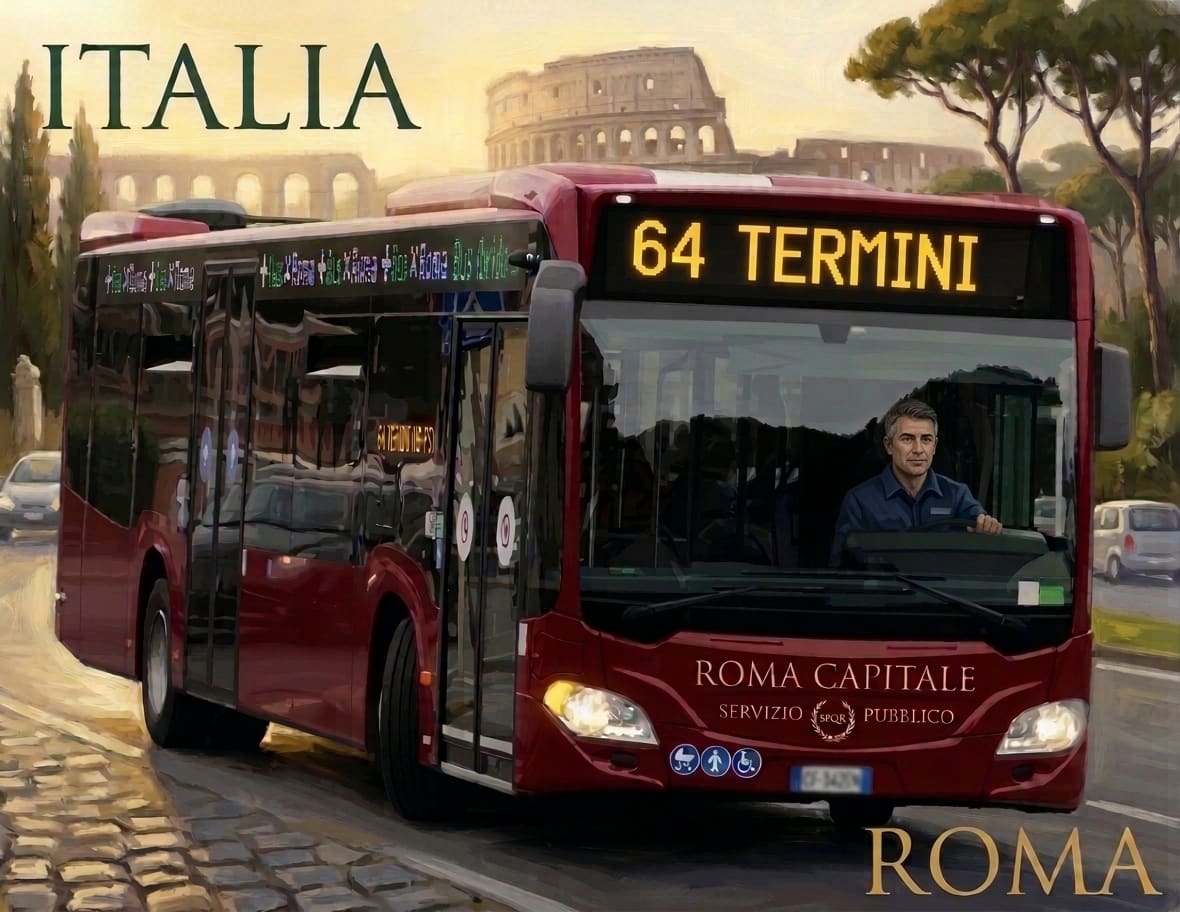
Some trips leave you with photographs, memories and the satisfaction of having discovered an exceptional city. Others leave you with questions: were we victims of an injustice, or have we encountered an organised practice that should be investigated? What happened to this group falls into the second category.
The group had bought tickets to travel to the Vatican, at €1.50 per person. On the first bus they tried to board, they were told they could not pay by card, so they went to a kiosk to buy tickets instead. They were not trying to travel for free: they wanted to do things properly. However, once on the bus, they could not validate their tickets: the machine displayed «fuori servizio» («out of service»). According to the officers, the ticket validator would not be working until the bus set off. It is hard to understand why tickets cannot be validated before the bus starts, leaving passengers at risk of a penalty. It is also more dangerous to do this while the vehicle is moving. The incident ended with a €104.90 penalty per person, reduced to €54.90 if paid on the spot.
It is legitimate to require passengers to validate their tickets, but there should also be a clear solution when something goes wrong. Why should a situation like this end in a hefty penalty without a clear explanation of what to do?
Transport checks or a business built on penalties?
According to those affected, three administrative police officers and a supervisor appeared after just two stops. They approached the group, asked for their documents and ordered them to get off at the next stop, saying it was the Vatican. They later found that they still had two stops to go. The travellers felt intimidated by the intervention, which took them off the bus and ended with eight penalties. A card machine was used to take payment on the spot.
Paying €54.90 instead of €104.90 added to the pressure and gave the impression that collecting money took priority over clarifying what had happened.
Why did they pay? Fear comes at a price, too.
In a foreign country, facing a language barrier and with a return flight they could not miss, the travellers feared the consequences of refusing to pay. They had neither the time nor the information to check their rights. It cannot be said that this was part of an organised scheme, but those affected felt the officers’ actions were intimidating and disproportionate. When a traveller is confronted by several inspectors, a hefty penalty and the option to pay less, how much opportunity do they really have to understand their rights and make a considered decision?
An isolated experience? The account of a priest, two other people, websites...
During the intervention, an English-speaking priest came over to ask what was happening. After hearing their account, he said the exact same thing had happened to his group the previous year. There were sixteen of them, including several priests: they had also bought tickets, had trouble validating them and ended up being taken off the bus and fined.
A taxi driver who was told what had happened also said it was a common practice involving foreigners and said he was ashamed of it. At the airport on the day of their return, another person described a similar experience during their stay.
Many accounts online are almost identical to this one.
These are accounts from different people that deserve to be heard, although they do not amount to conclusive proof of an organised scheme. But they do warrant questions: are these isolated cases? Is there a recurring technical problem and a poorly designed procedure? Are tourists at a disadvantage?
The public transport operator and the authorities should explain what passengers should do if they cannot validate their ticket, what instructions are given when the bus is stationary, and what safeguards are in place to review a disputed penalty.
Rules must be followed, but they must also be applied transparently, proportionately and with proper safeguards. If a machine is not working, there should be a safe, clear alternative. If the system only allows tickets to be validated once the bus is moving, there should be an explanation of why it was designed that way and how passengers are kept safe.
Rome cannot afford to make tourists feel like easy targets for revenue-raising. Visitors to Rome are not asking for special treatment: they expect to be treated fairly. A confusing intervention, a hefty penalty and accounts that tally can damage confidence and the image of a city that should be the first to want to clarify what happened.
Eight travellers, eight penalties and far too many questions. Are the rules being enforced, or is collecting money being given priority over information and proportionality?
Because if all it takes to collect a fine is a card machine, while there are no clear answers about how to ensure a fair process, the impression left is devastating: police officers who act like muggers with a card machine. Rome should be the first to want to prove that this impression is wrong.
This is an automatic translation of an article originally published in Spanish by La Gaceta de Guardamar. If in doubt, the Spanish version prevails. Read the original · More news in English