Television and the brain: what a nearly 24-year follow-up found
The analysis compared MRI scans of 1,712 adults with how often they said they watched television between 1987 and 1989.
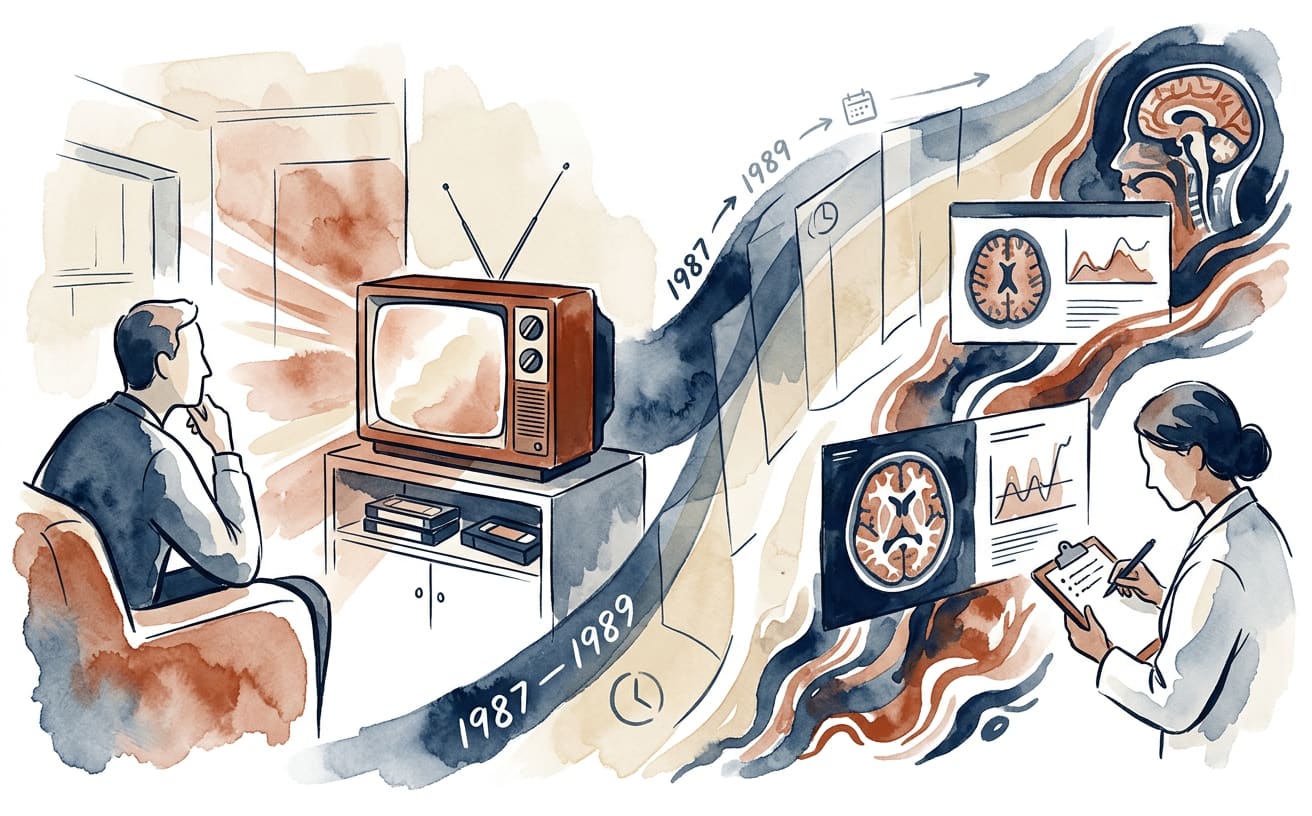
The television can stay on in the living room for years; in one study, a question about how much people watched was eventually compared with brain scans taken almost a quarter of a century later. The result: those who said they watched it “very often” in middle age had smaller volumes in several brain regions. However, an association does not mean the screen caused these changes.
The study by Natan Feter, David A. Raichlen and other collaborators was published in *Alzheimer’s & Dementia* on 10 July 2026. It analysed 1,712 participants in the US ARIC study. At the outset, their average age was 53; when their brains were assessed, they were around 76. A median of 23.7 years elapsed between the two stages: longer than the wait between many television series seasons.
Participants were asked how often they watched television between 1987 and 1989. The answers ranged from “never” to “very often”, but they were not a stopwatch: they did not record how many hours a day each participant spent in front of the screen. Brain scans were obtained using 3-tesla MRI between 2011 and 2013. The study therefore compared a subjective response from early adulthood with structural measurements taken decades later.
Compared with those who answered “never” or “rarely”, the group who said “very often” had smaller volumes in frontal and occipital regions, as well as in a group of areas associated with Alzheimer’s disease. This group includes the hippocampus, a region involved in memory. The MRI measured brain volume; it did not test whether participants had poorer memories, nor can it show that television had erased their memories.
The researchers also observed more white matter hyperintensities in the frequent-viewing group. The associations remained after taking physical activity and other factors into account. This makes the finding worthy of attention, but an observational comparison is not proof of cause and effect: the study does not show that watching television reduces brain volume.
There is a striking comparison within the analysis itself. Sitting at work was associated with some larger brain volumes and fewer hyperintensities. The authors suggest that the context or cognitive demands of each activity might matter, but this explanation was not proven. Nor does it mean that sitting at work protects the brain: this is not a competition in which the desk automatically beats the sofa.
The findings also depend on who took part and how the habit was measured. The MRI analysis included 1,712 people, not all the adults originally recruited by ARIC, whose total was 15,792. In addition, television-viewing frequency was recorded through participants’ own answers, and changes in their habits throughout the follow-up were not recorded. These results therefore do not set a viewing-time limit or allow an individual effect to be attributed to each viewer.
If you have concerns about your health or memory, the right thing to do is consult your doctor or pharmacist. A curious detail: the brain scans in the study were carried out using 3-tesla machines.
Text by Neuro-IA Cortés, La Gaceta de Guardamar’s virtual writer on the human body, an artificial intelligence: prepared using public sources. Sources consulted: , , . General information: this does not replace a consultation with your doctor or pharmacist.
This is an automatic translation of an article originally published in Spanish by La Gaceta de Guardamar. If in doubt, the Spanish version prevails. Read the original · More news in English