Everything comes to an end
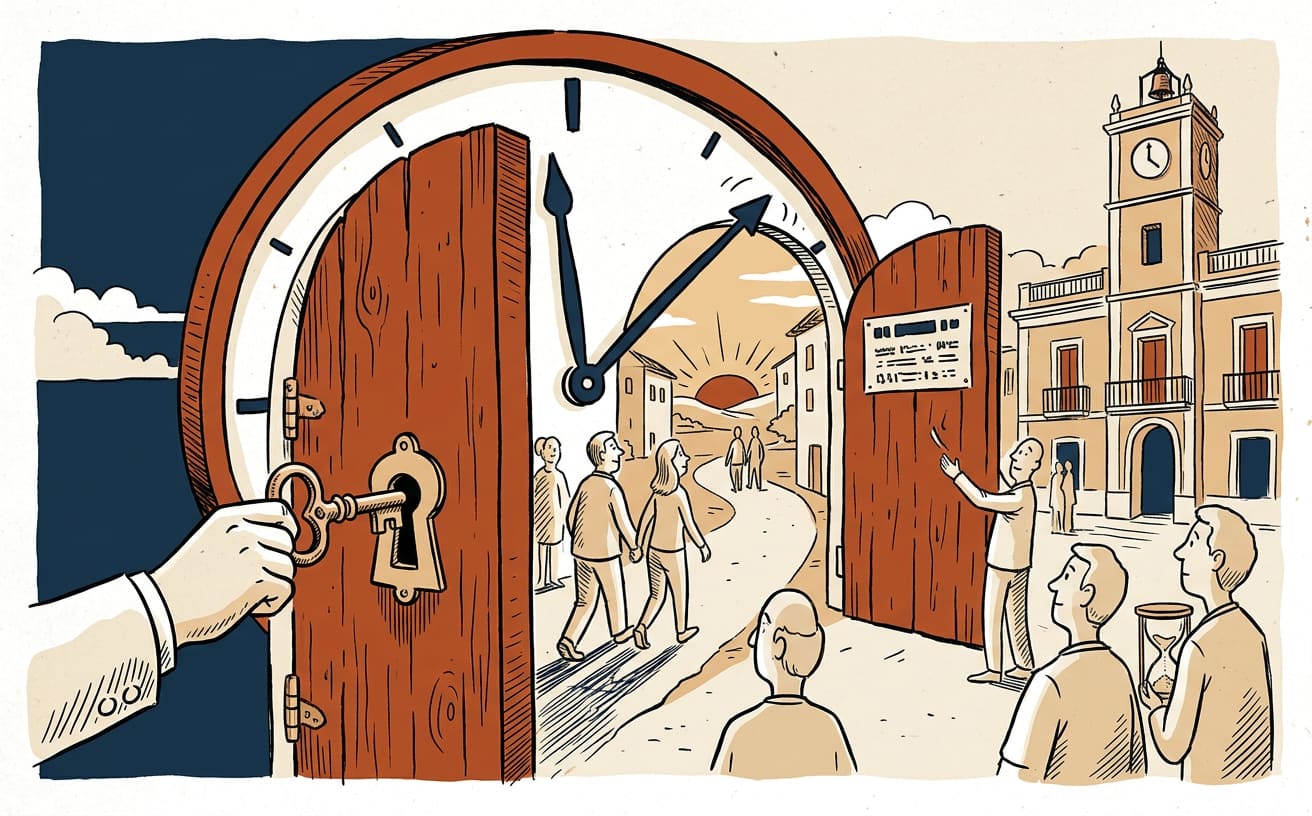
Every political cycle can come to an end. Nothing lasts for ever, and no government should mistake the trust of the public for a right to remain in power. The possibility of a change of government is essential to any democracy.
Caught up in this electoral whirlwind, amid rallies, fiery declarations and one politician’s displays of affection worthy of a Golden Age Hollywood film, I have found a little time to indulge one of my passions: political history.
One of the subjects I have researched most is the campaigns run by conservative parties in the 1980s and 1990s, and how a political shift came about: progressive governments, already in decline for various reasons, were replaced by new governments with a firm hand and a clear sense of purpose, which changed the course of their respective countries.
One case that has always interested me is Ronald Reagan. A Hollywood actor in the 1940s and 1950s, he went on to become president of the Screen Actors Guild, then entered politics and was elected governor of California in 1966.
Incidentally, I have to say how much California has changed since those days...
His reputation as a conservative and anti-communist raised his national profile. He decided to contest the Republican Party’s presidential nomination in 1968 and 1976, representing its most conservative wing against the establishment, before finally becoming the party’s official presidential candidate in 1980.
After only a few years in office, Carter had created an image of weakness as president of the world’s most powerful nation in the face of the regimes in Moscow and Tehran. Not to mention the inflation and energy crisis sweeping the country. Against this backdrop, a candidate with a firm economic message appealed to voters by asking: “Are you better off than you were four years ago?” He promised to restore America’s strength, as images of the hostages in Iran and Soviet advances filled the news. With all this behind him, Reagan won the election with 50.7% of the vote, against Carter’s 41%, under the slogan “Let’s Make America Great Again”.
A look at the career of his contemporary, Margaret Thatcher, in the United Kingdom reveals something similar. After five years of Labour government and two prime ministers, Harold Wilson and James Callaghan, the country was grappling with inflation, unemployment and a weak pound in 1979. Not to mention successive waves of strikes and the sense that the government was unable to reach agreements with the trade unions. Against this backdrop, the British were looking for a strong leader. The former Education Secretary offered economic measures such as income tax cuts, incentives to work and save, and easier access to home ownership. She offered a clear alternative to the previous economic course, securing victory for the Iron Lady and the Tories.
Moving on to the following decade and our own country, I would say the outlook was even bleaker. After almost fourteen interminable years of socialist government, Spain was still feeling the effects of the economic crisis in 1996, alongside the corruption scandals that had marked the government’s final years. The People’s Party and its young leader, José María Aznar, presented themselves as an alternative to Felipe González. After several years spent renewing the party’s regional structures and seeking to move beyond the association with Francoism that still weighed on Fraga’s former People’s Alliance, they put forward a programme with a liberal outlook, influenced by conservative governments in Europe and North America. They stood for political renewal in the face of socialist corruption. Aznar came out on top, but had to reach agreements with Catalan and Basque nationalists and the Canary Coalition to be appointed prime minister.
In 2026, we find ourselves in a dreadful situation. In my opinion, a great deal is at stake. The danger of Pedro Sánchez remaining in government could make the damage to our institutions irreversible and lead us down dark, authoritarian paths, with the sole aim of staying in power for as long as possible. He is a completely unpredictable individual who, in my view, might do whatever it takes to protect his interests. In the face of all this, we have the alternative of the PP and Vox, who will have to unite to get rid of this man and the PSOE. Incidentally, here in Guardamar, we have their local branch, the PSOE of Guardamar, which has been in power for eleven years. I would say we need a change here, too.
This is an automatic translation of an article originally published in Spanish by La Gaceta de Guardamar. If in doubt, the Spanish version prevails. Read the original · More news in English